

Receiving Colour: Dénouement

I’ve been deeply buried under a mountain of research for the revision of my book on art technology of the Islamic Golden Age, but alongside deciphering manuscripts I have continued the work on the piece that was the subject of Receiving Colour, keeping an eye out for dye sources even as winter deepened. To my surprise, I found enough to complete the piece just as spring started to make itself felt. So here’s the rest of it, and the finale…
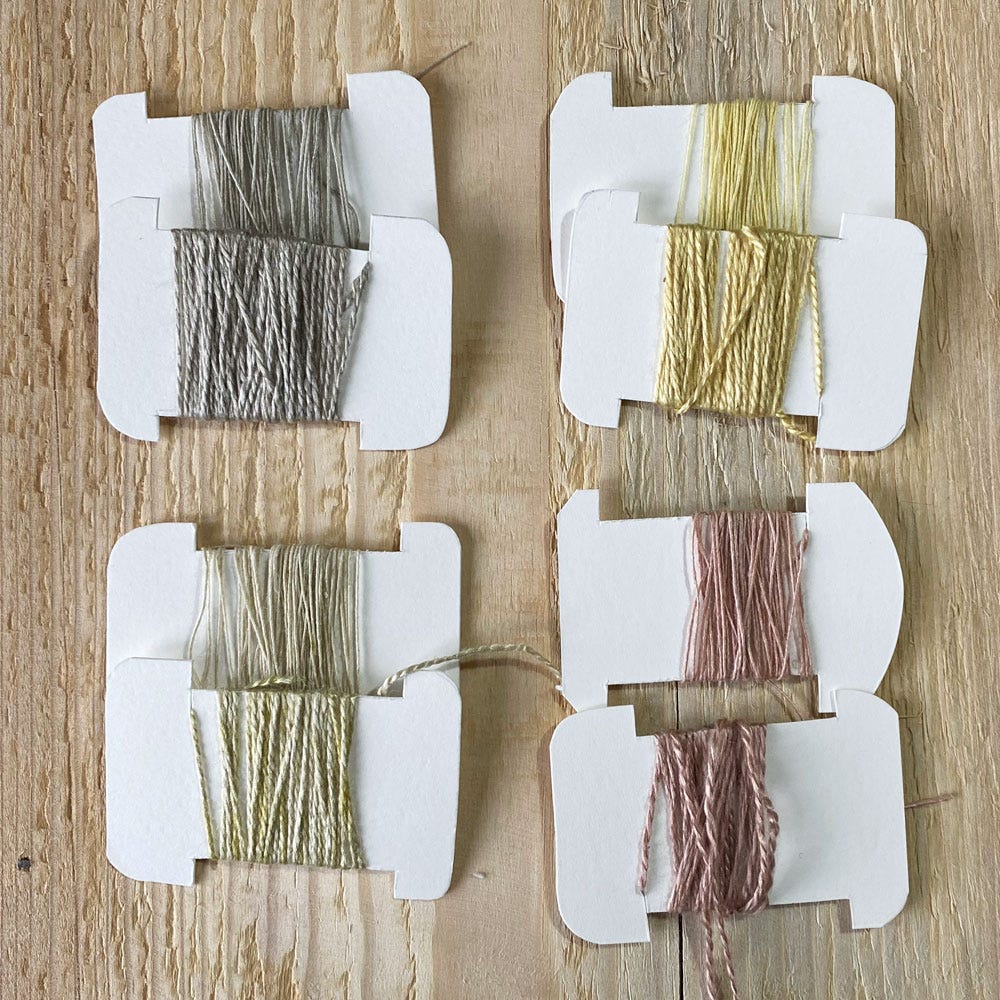
I didn’t systematically document every plant that came after I left off, but following the Virginia creepers there was privet from which I got pale blue and green, onions skins from our cooking, alder catkins, straggling nettles, the last few blossoms of a camomile relative, ivy leaves from the garden…
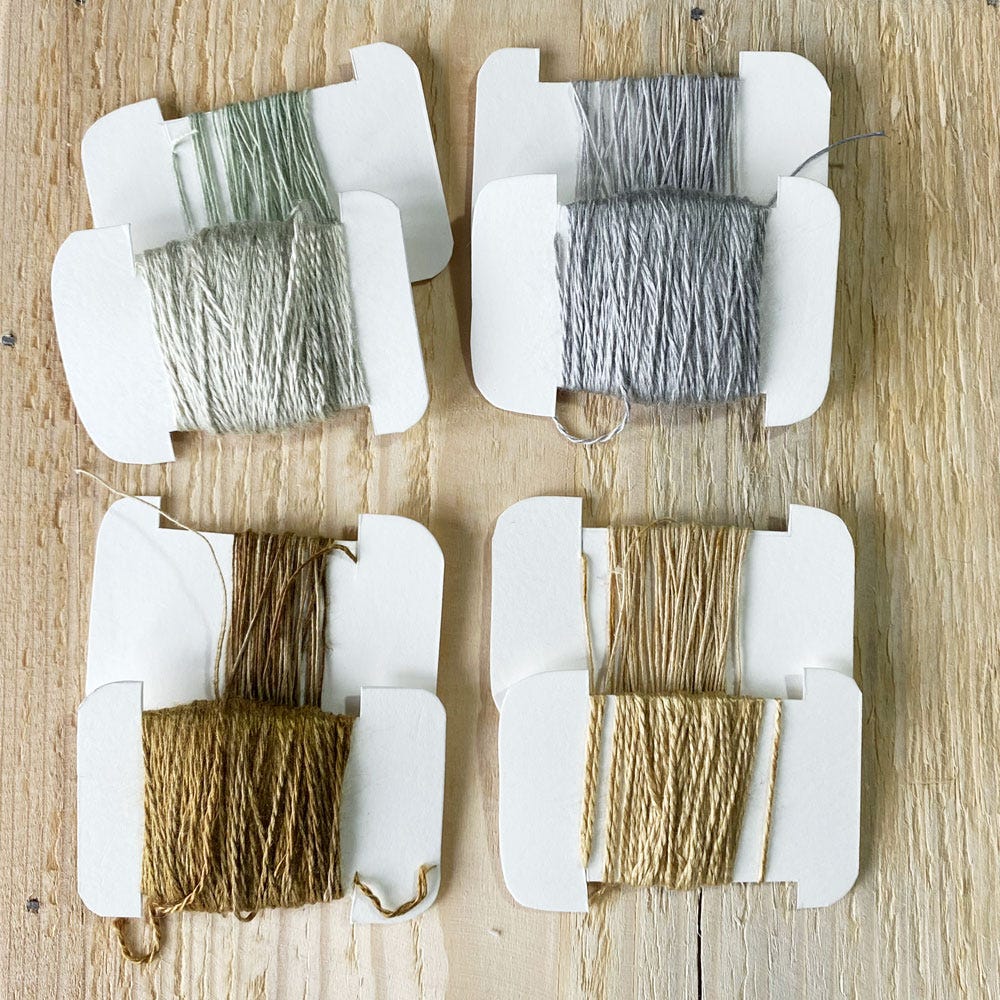
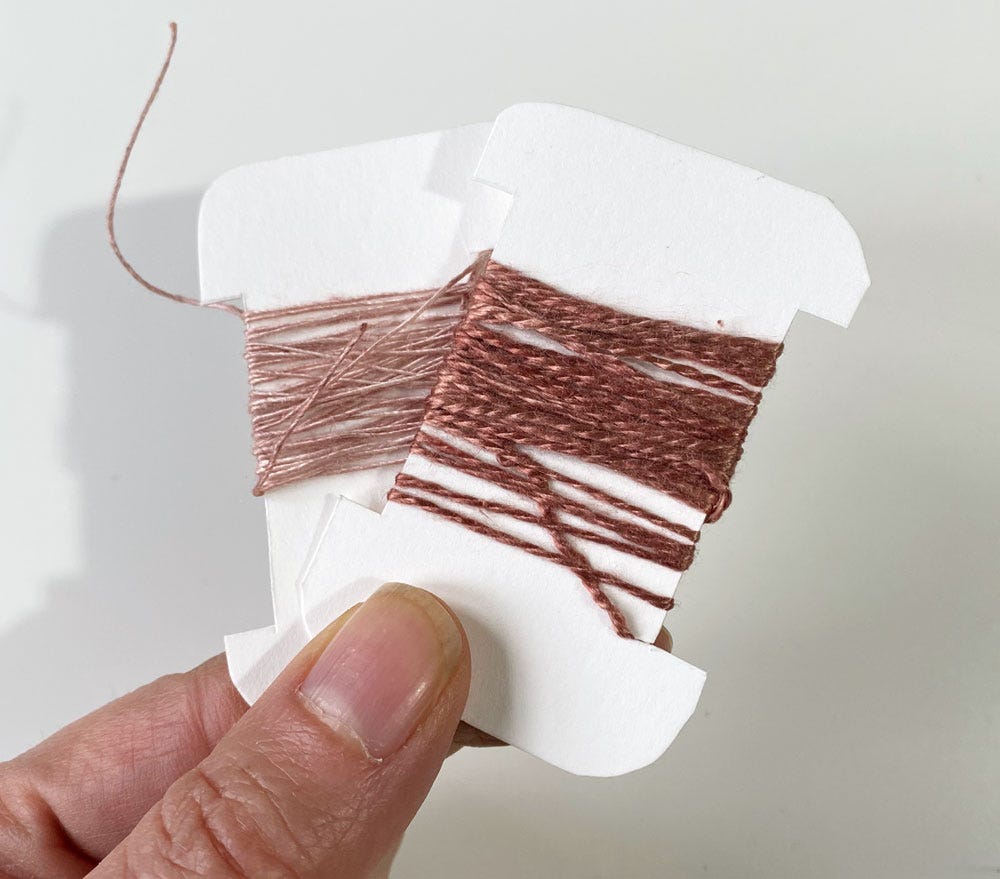
We had family staying at Christmas and I set them to work cracking a bag of pecans in the shell from my grandfather’s garden. The shells produced a lovely brown that now I look at it again, is really an old rose hue.
Then in January I was back in Lebanon for a few days, taking my partner around must-see places. On the historical site of Byblos, where people have lived for a continuous 8,000 years, olive trees are still present among the dug up temples.
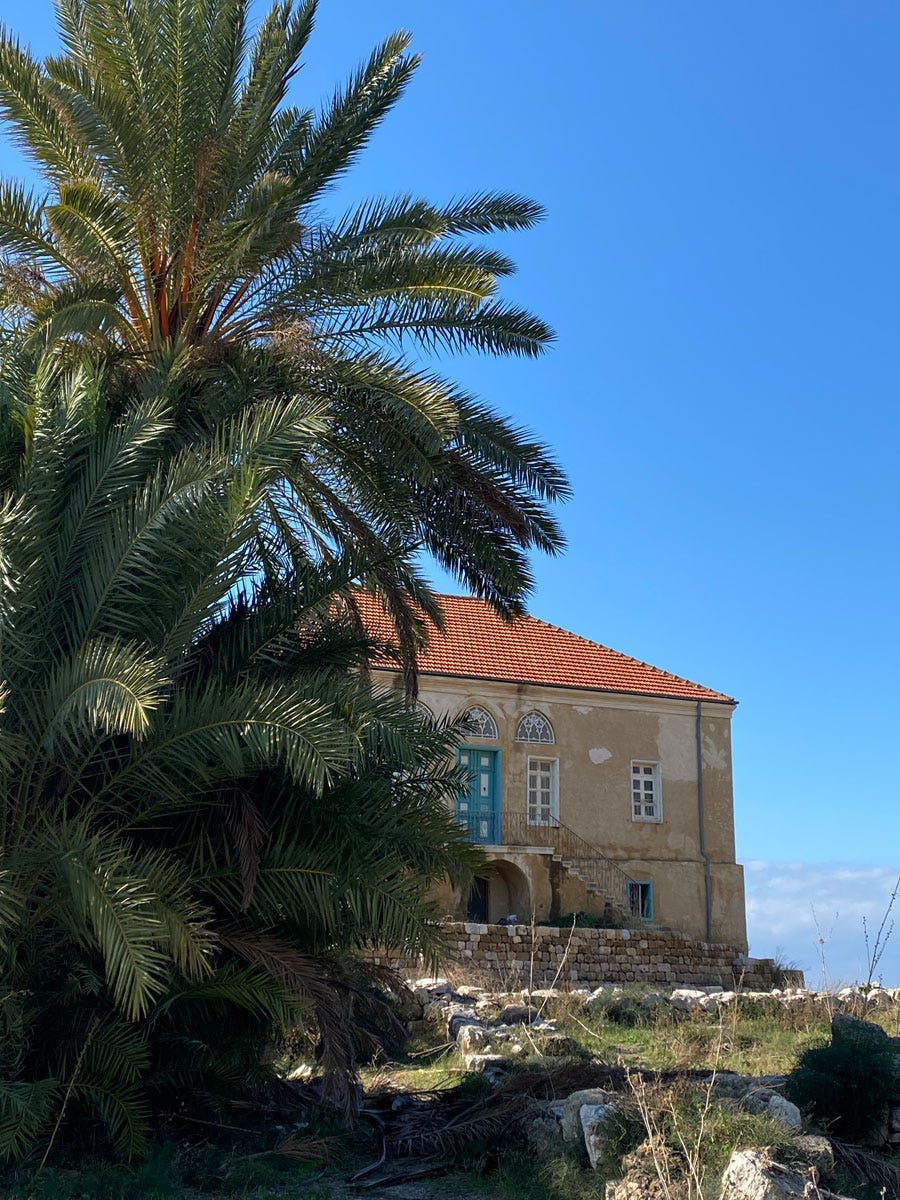
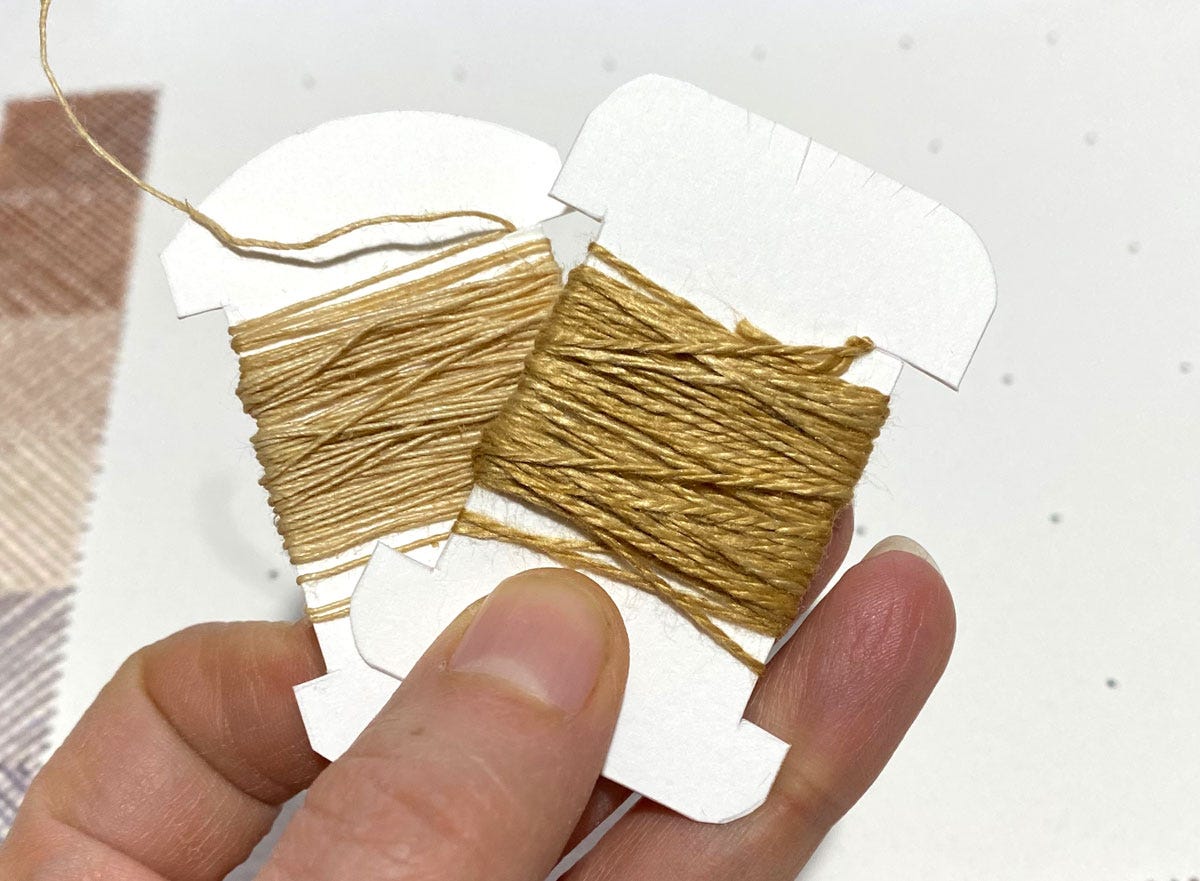
Somehow I didn’t take photos of them – only of the archetypal Lebanese house above, that is now iconic to the site – but I did collect a handful of leaves which I brought bakc with me. They dyed silk and linen with a gorgeous and unexpected “old gold” hue that I will certainly seek out again.
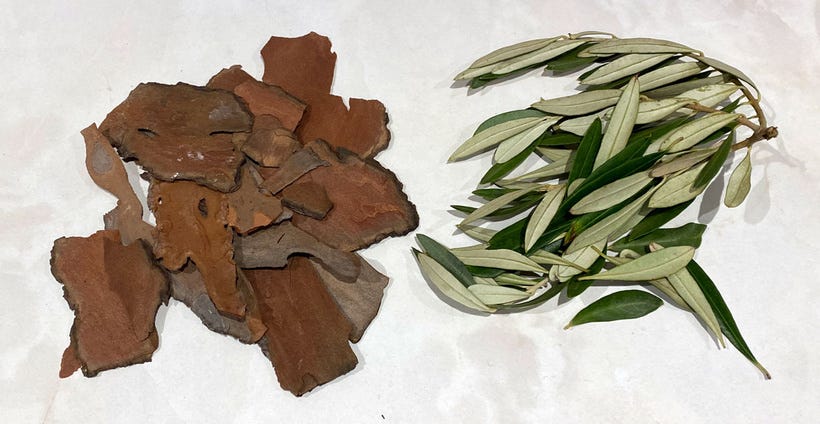
While in Beirut, I also picked up bark from Mediterranean stone pines (Pinus pinea) growing on the campus of my alma mater. Unlike more northerly species, they shed their bark in large smooth flakes, some the size of my hand, so the bark is available without hurting the tree.
It was a few weeks after this before I started seeing signs that winter wasn’t going to last forever…


This lawn of crocuses charmed me, and then I wondered if any colour could be coaxed out of them. I knew from experience that covering them in water would just destroy the biochrome, so Icrushed them instead, and pounded the fibres directly in the mortar.


Well, what is this!
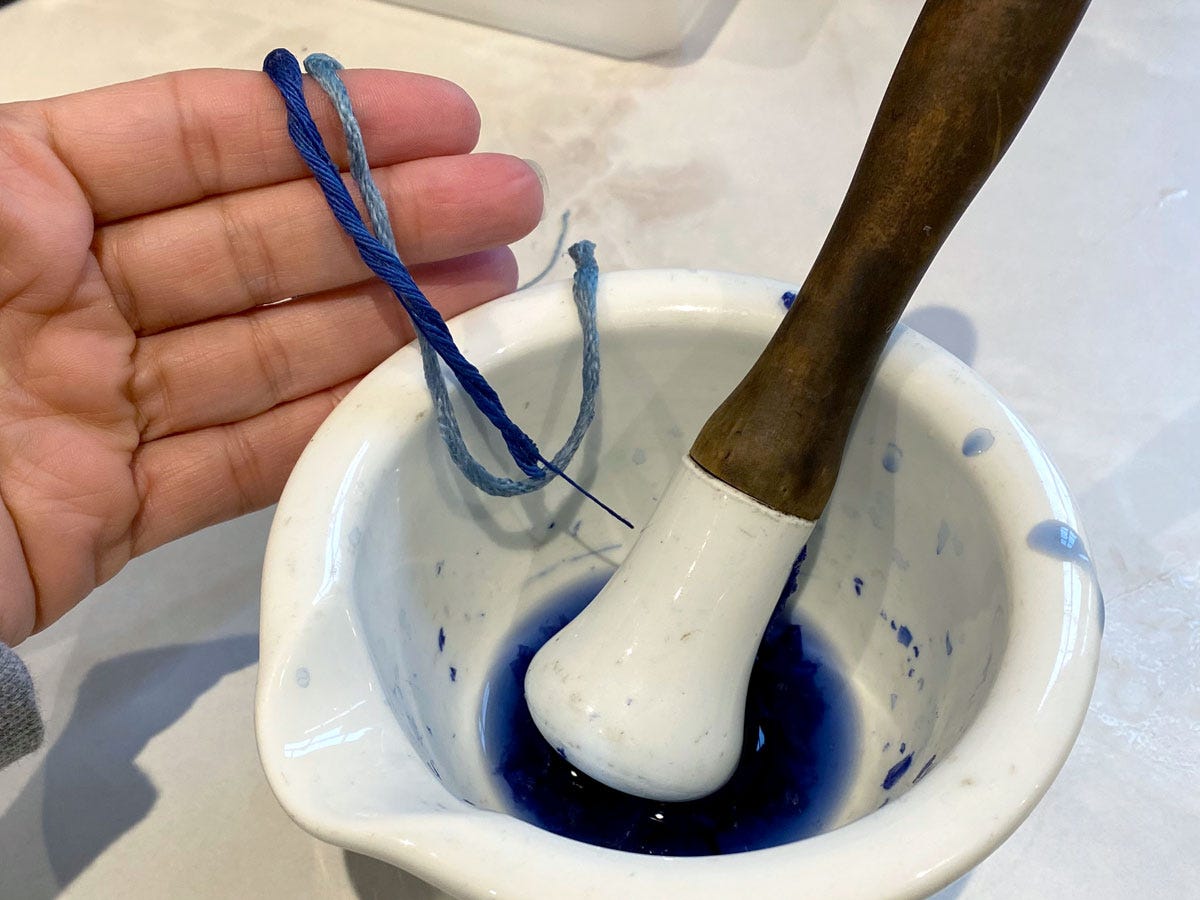
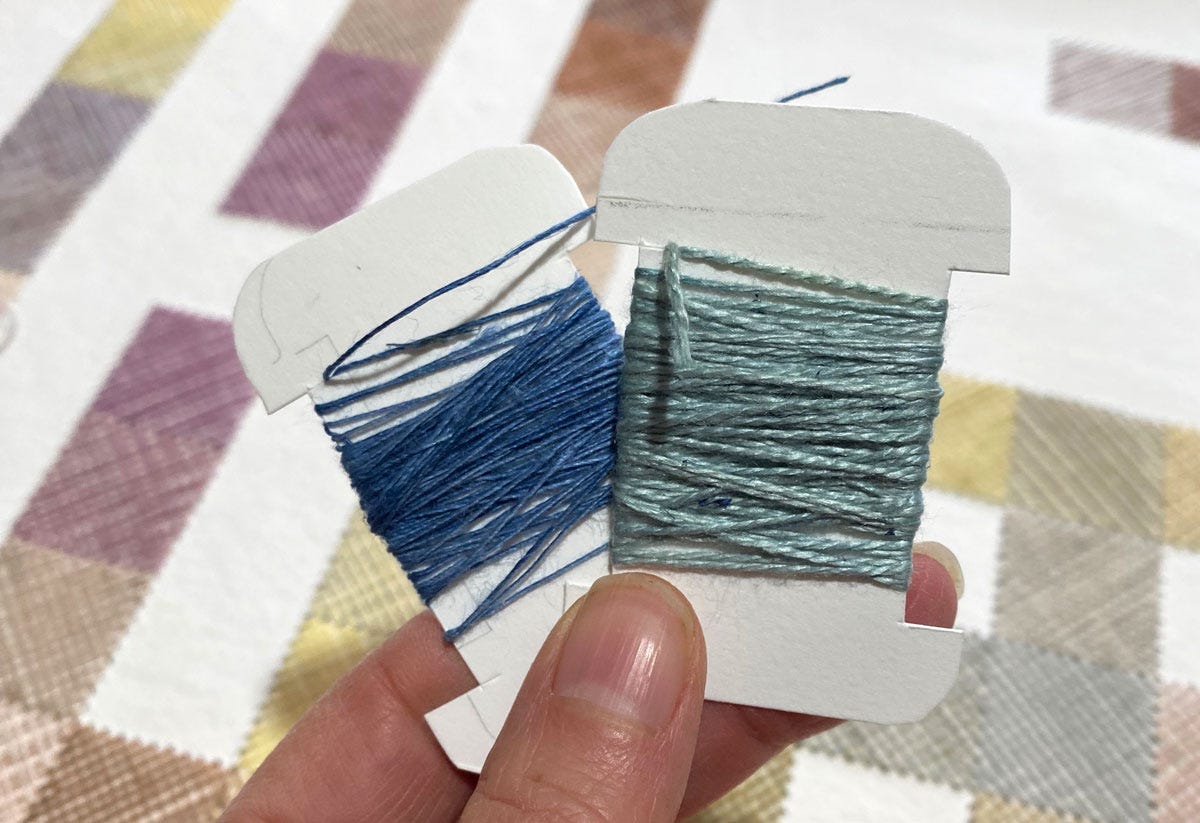
Of all the plants I foraged for this so far, the crocuses saw the greatest difference between fibre uptake: the silk came out a light teal, but the linen is quite a deep blue!
Below are more blossoms that stopped me in my tracks on my way home one day. It looks like they belong to the Japanese quince (though I’m by no means certain of this identification).
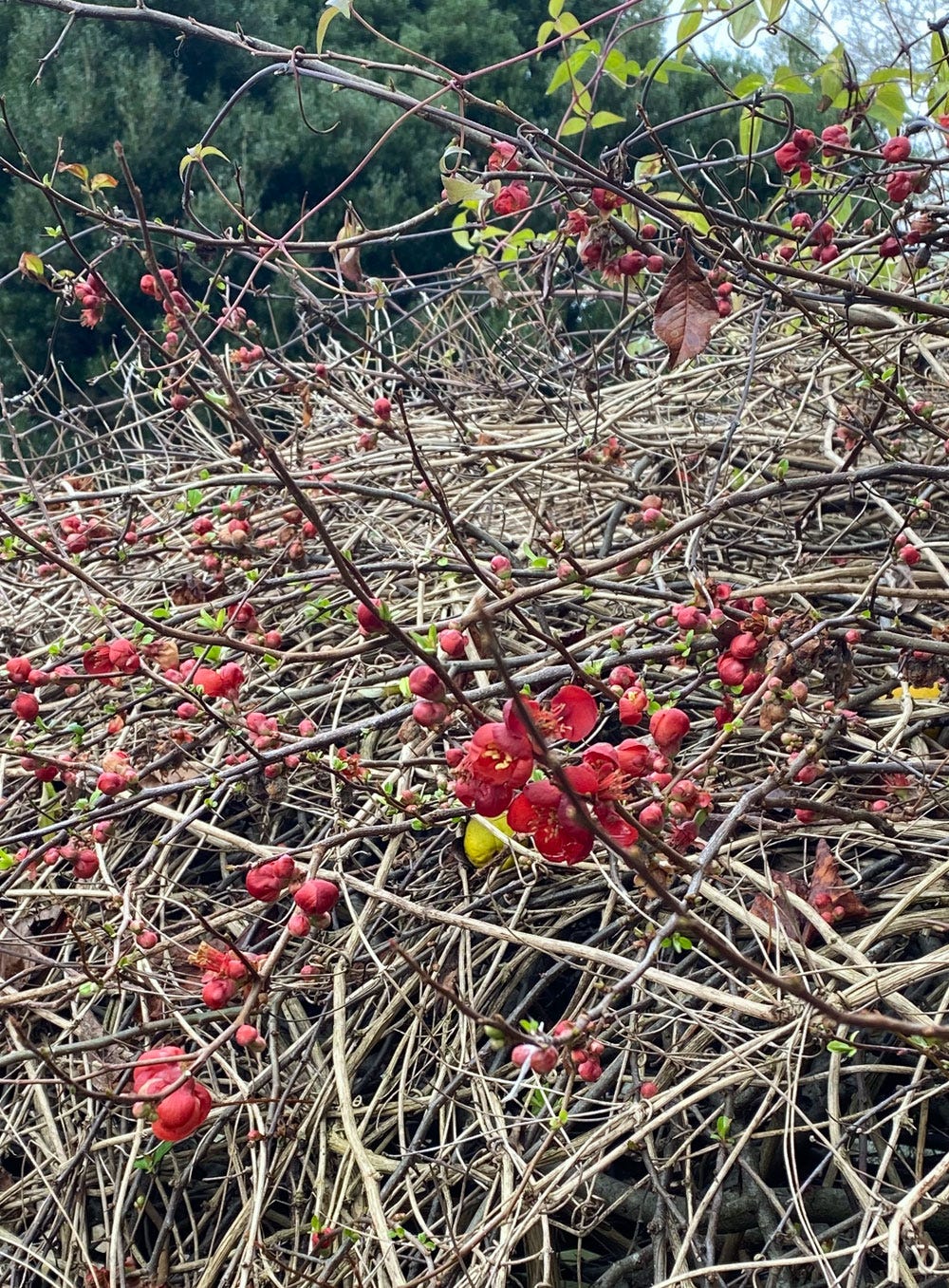
Naturally, I had to give them a try…


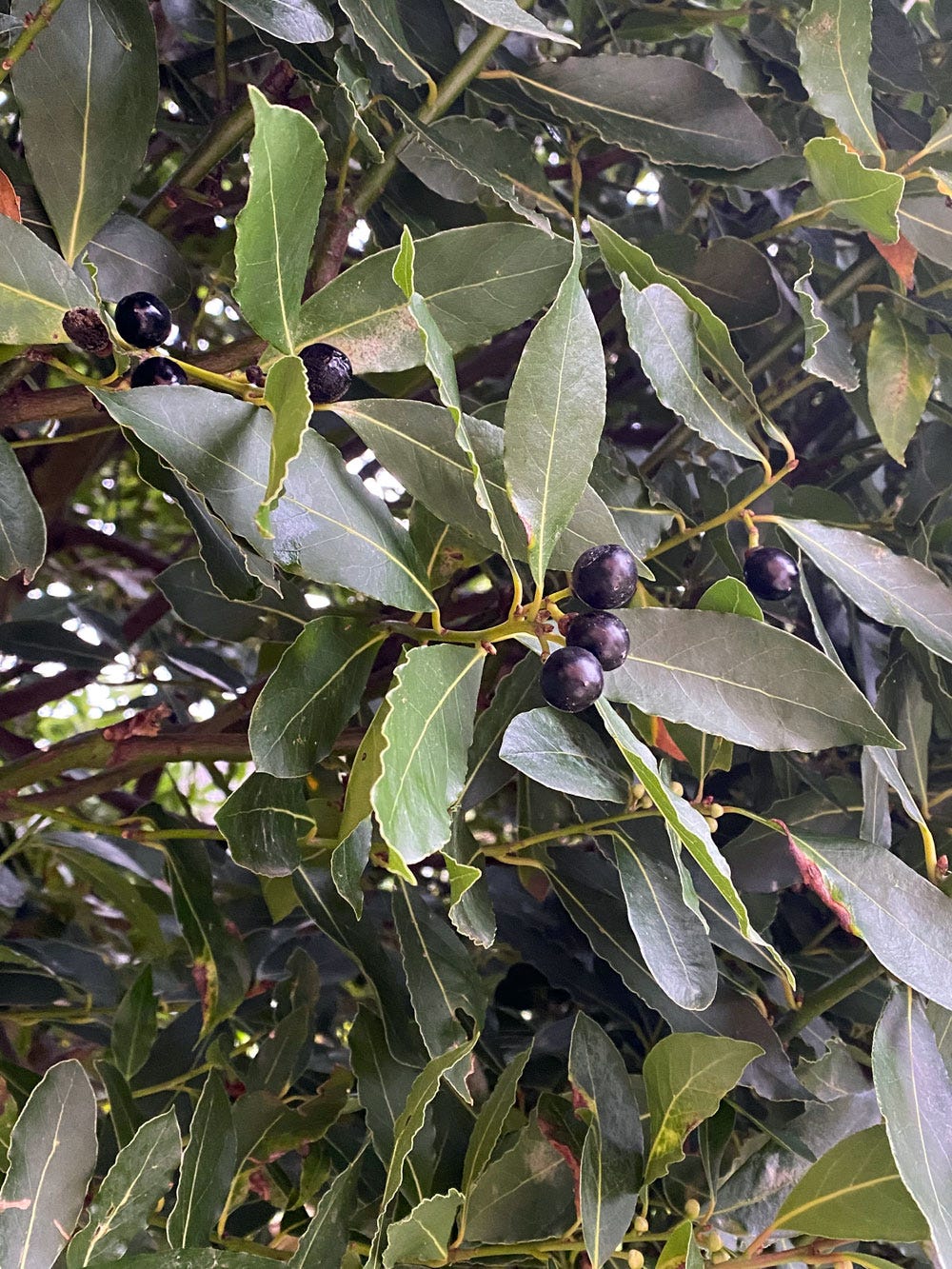
Around the same time I noticed our bay laurel tree was full of berries. This was exciting, as laurel oil is غار ghār, the most traditional and characteristic essence used in our soaps, and indeed when I boiled the berries the smell was so familiar, and took me right back to the souk.
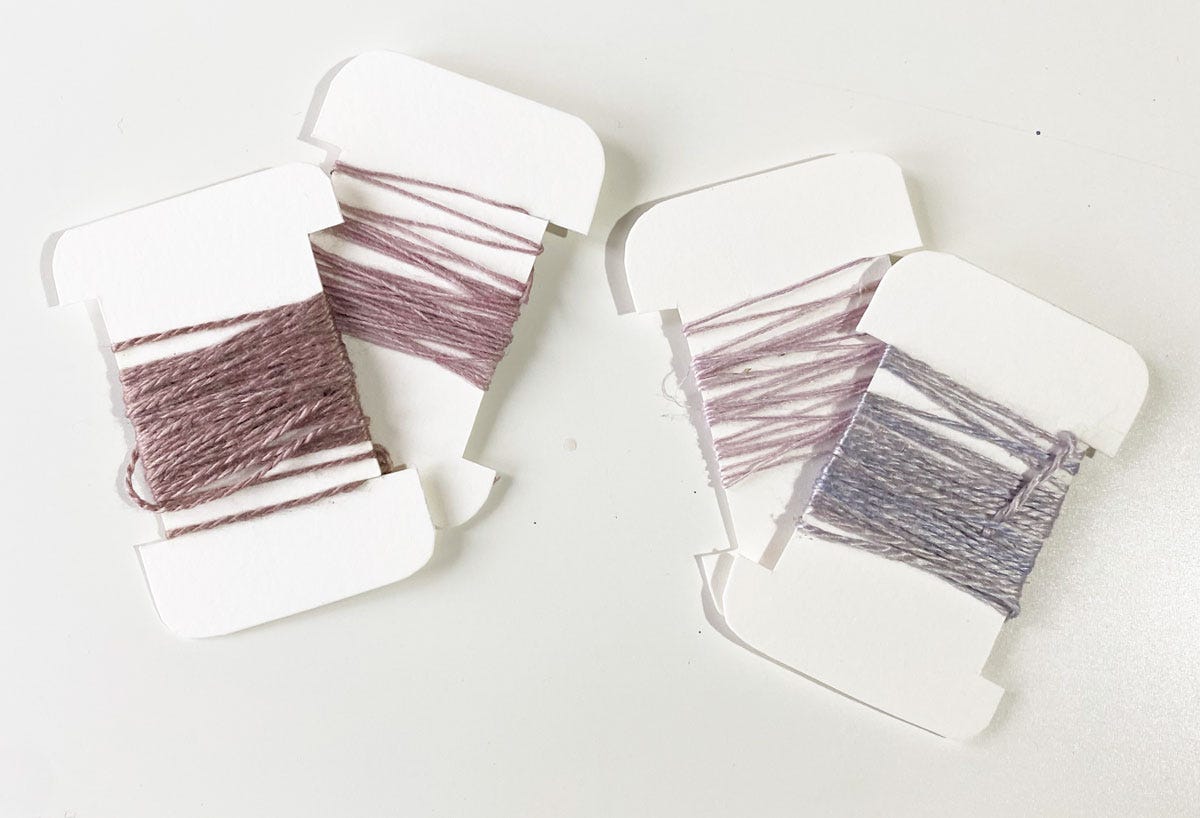
By that time, daffodils were popping up everywhere. There was only one slot left in my artwork, and how could I resist a sunny yellow to finish?
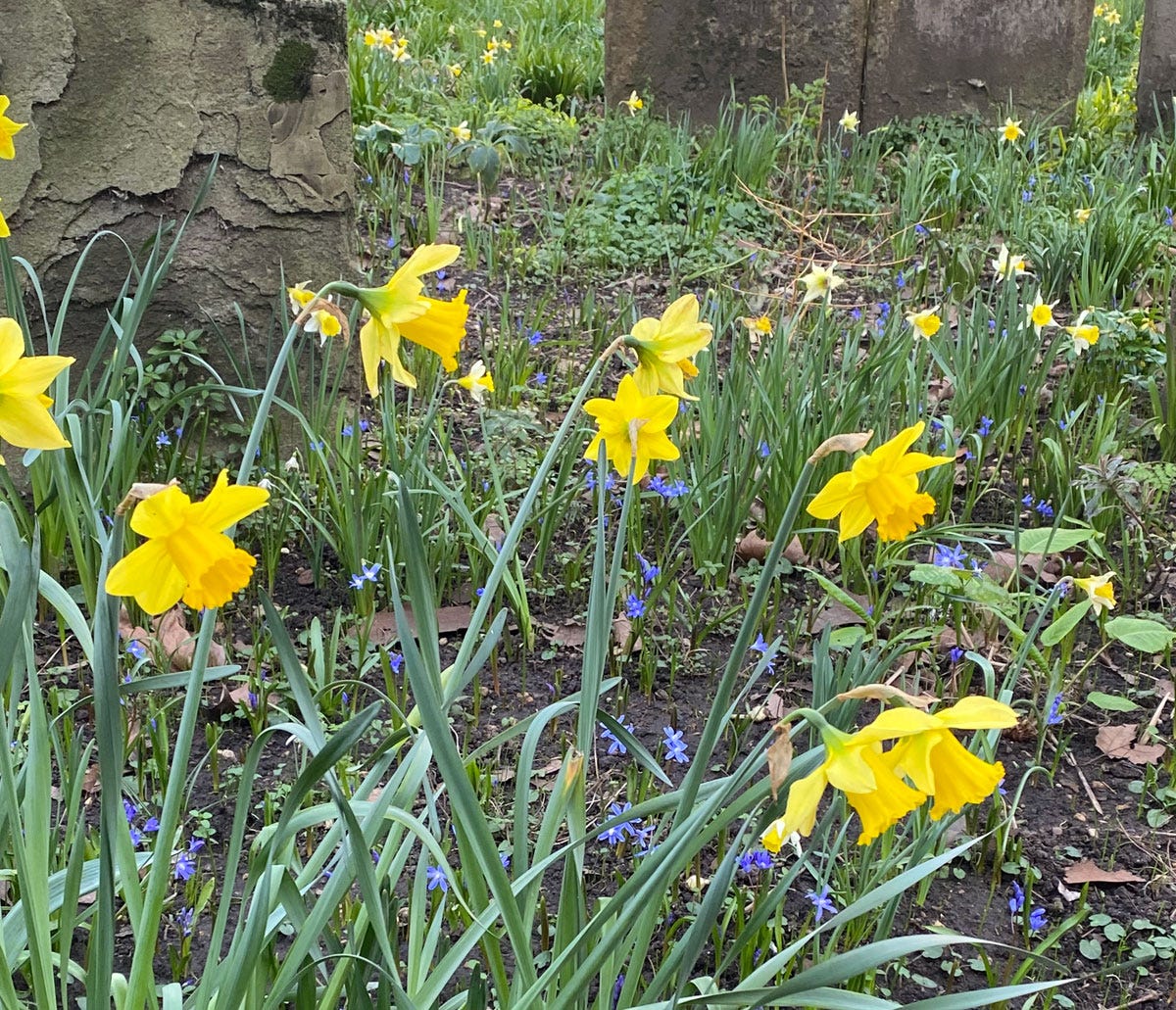
Daffodils make an excellent yellow, particularly when laked: the lemon yellow warms up to a golden yolk. So I sprinkled a tiny amount of soda ash into the mortar to deepen the hue.
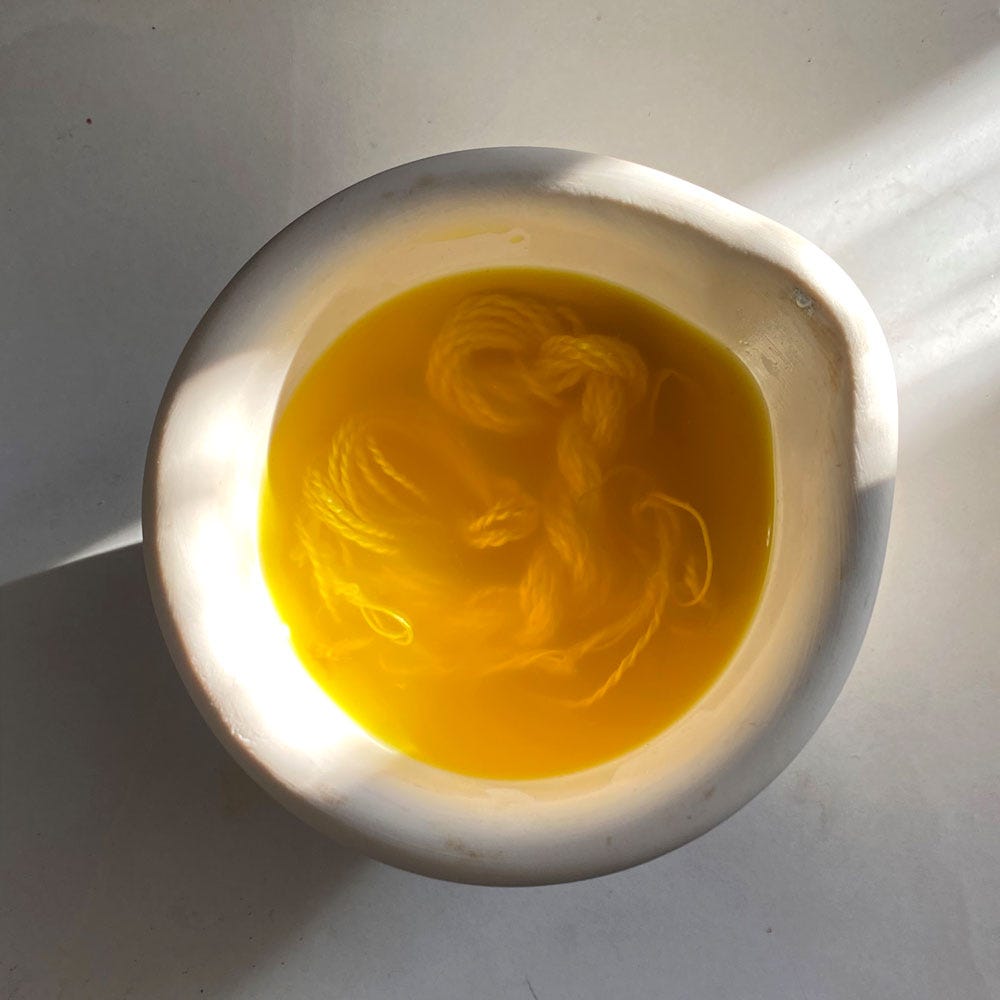
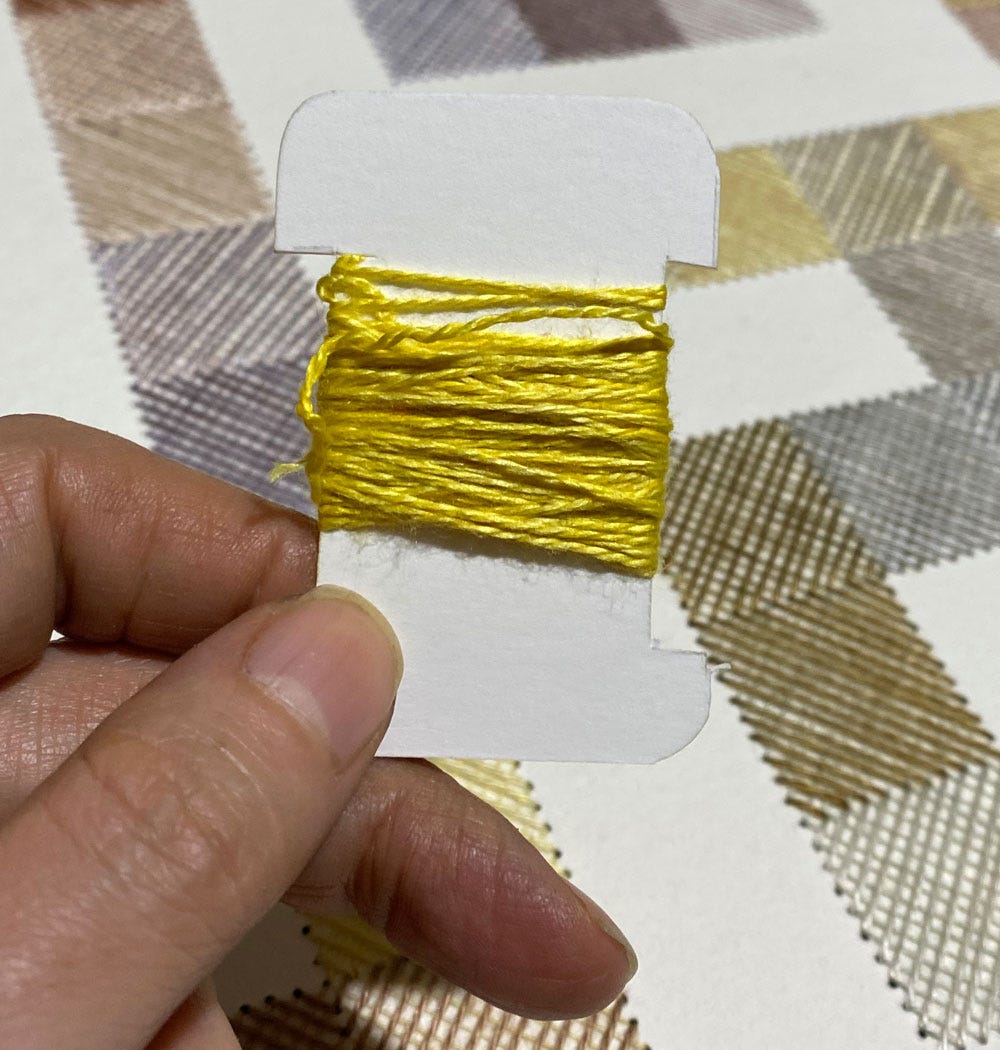
The vibrant result was like coming back to life after so many grey, grey days.
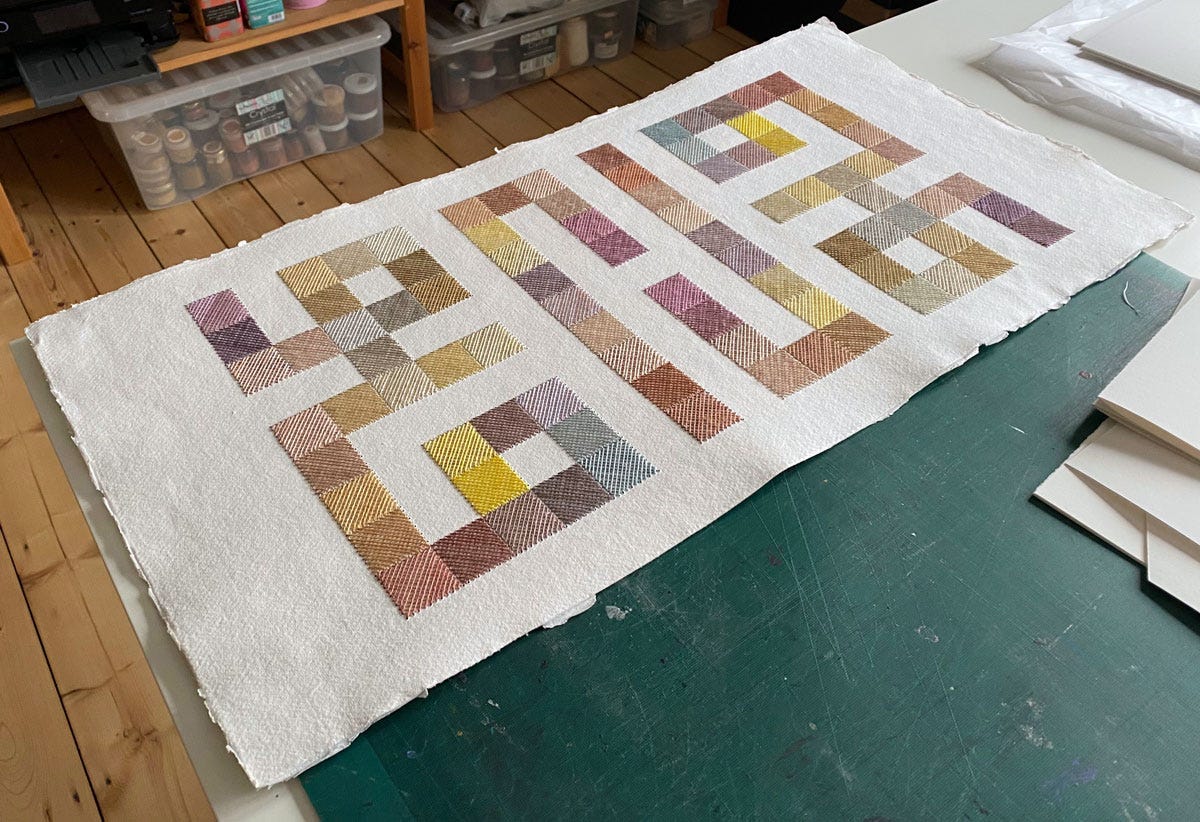
And here it is, all done… I titled it ‘Receiving Grace’, and it’s made up of 22 dyes.
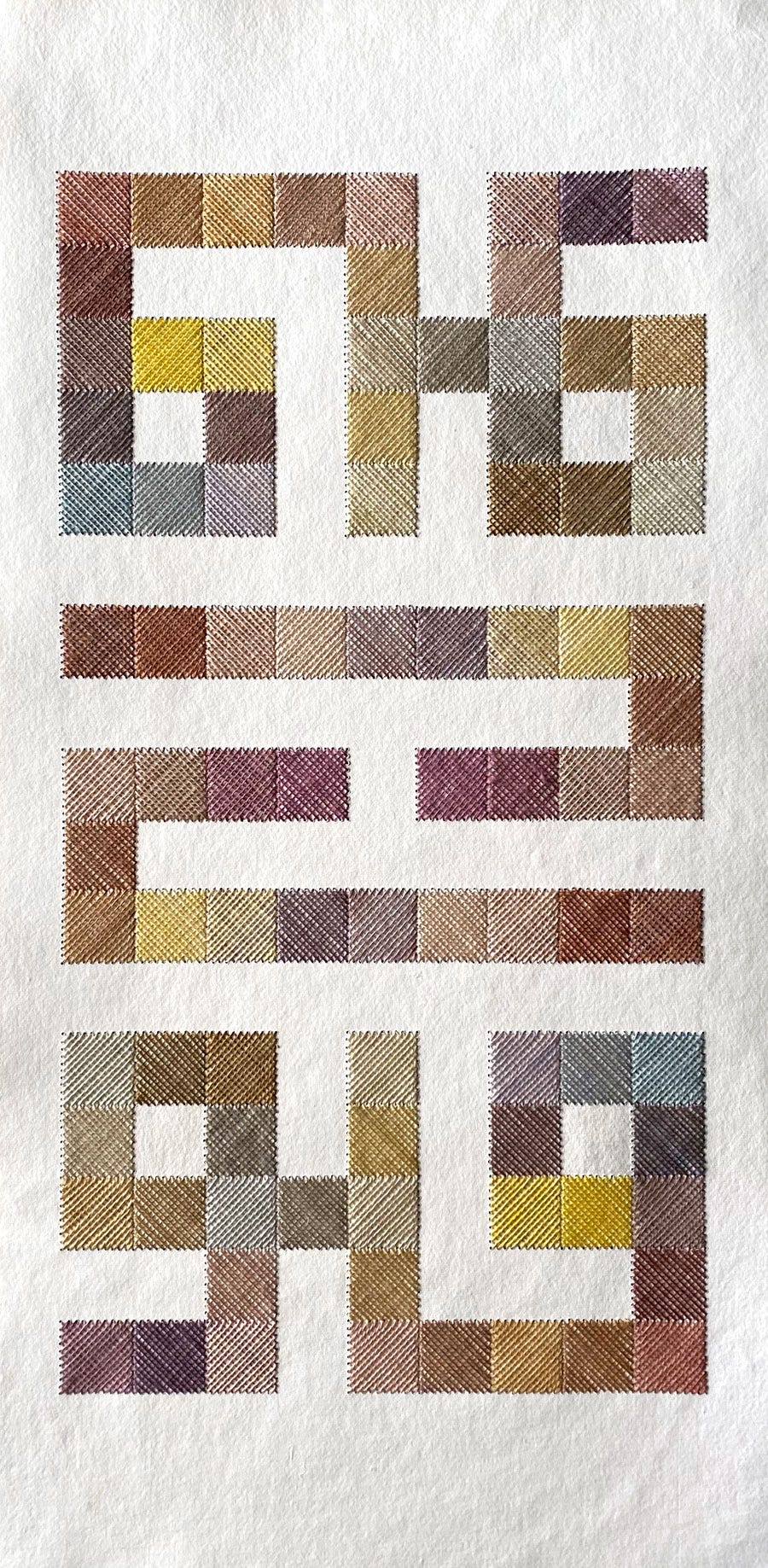
This is absolutely stunning. The design as well as the colours - the mirroring. Is it calligraphy or abstract? And of course I love the process too. Beautiful name - Receiving Grace. thanks for sharing.
this is just SO COOL!