

Receiving Colour
A remedy to expectation

Just a quick preface, for those interested in historical art materials: I’m currently crowdfunding for a revised edition of my long out-of-print Inks & Paints of the Middle East, and the campaign goes on till December 10. You can find it here.
I find myself quoting Fukumi Shimura a lot lately. Dyer, weaver, and National Treasure of Japan, Fukumi Shimura (who recently turned 101!) wrote several short essays about her work, gathered in a sublime little book titled Iro wo Kanaderu , rendered in English as The Music of Color.
She speaks of Kusakizome, which is botanical dyeing (”plants and greass”) as an act of “receiving colours” from nature, and I wanted to share this extract in particular:
Receiving Color
Sometimes people tell me about attempts at dyeing gone awry. I wanted this color, they say, so I used that plant, just like the book said, but the result wasn’t what I expected.
This has it backwards, I think. The colors we receive are already there, within the plants. Our task is simply to bring them across to our side unharmed, and give them somewhere to stay.
In winter, trees stand in the snow, stoically waiting for spring and preparing to send forth new shoots when it arrives. When we take their trunks and branches for dyeing, we accept without reservation the colors we find within, and bring them to life in our weaving.
Anything less would be a sin against nature. Every branch on a Japanese plum tree (ume) is densely covered in buds that were to be the blossoms of early spring, and this is the life that we receive.
It is the color of a thousand, ten thousand plum branches—their statement to the world.
It falls to us to heed that statement and bring that very color to life.
We cannot blend it with others—cannot combine the plum and the sakura to create a new color. That would be a crime against the trees, because their colors are more than just colors.
This beautifully articulated way of being resonated so deeply with me it made this aspect of my practice more conscious. The photos of her work made me long to dye without expectation and then put these fibres together and just see what comes of it. An idea for an art piece took shape, that may take all year to complete, which alongside gratitude to the plants is meant to reflect my gratitude for what life has given me this past year.
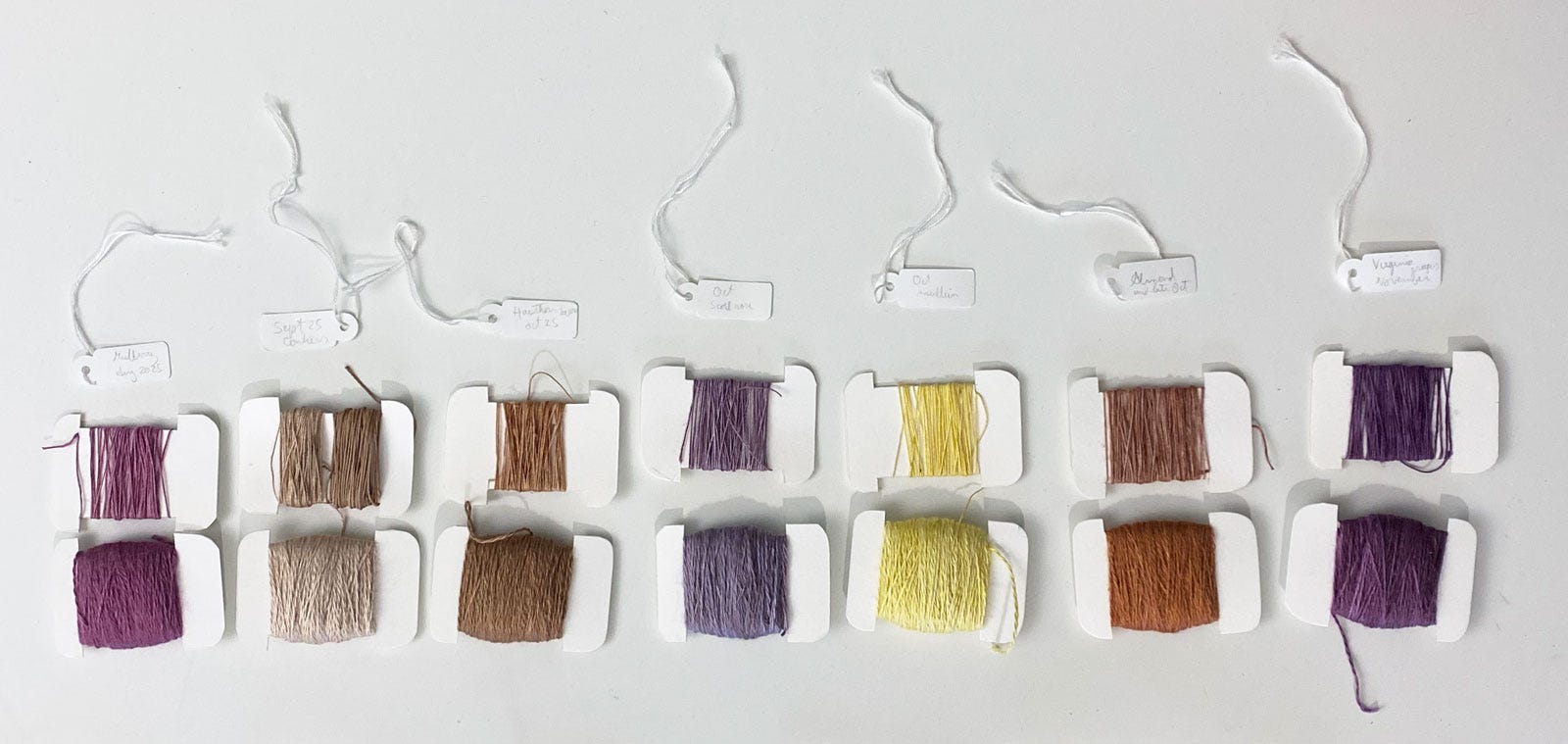
It started with a shower of conkers, which I couldn’t resist gathering to make ink…
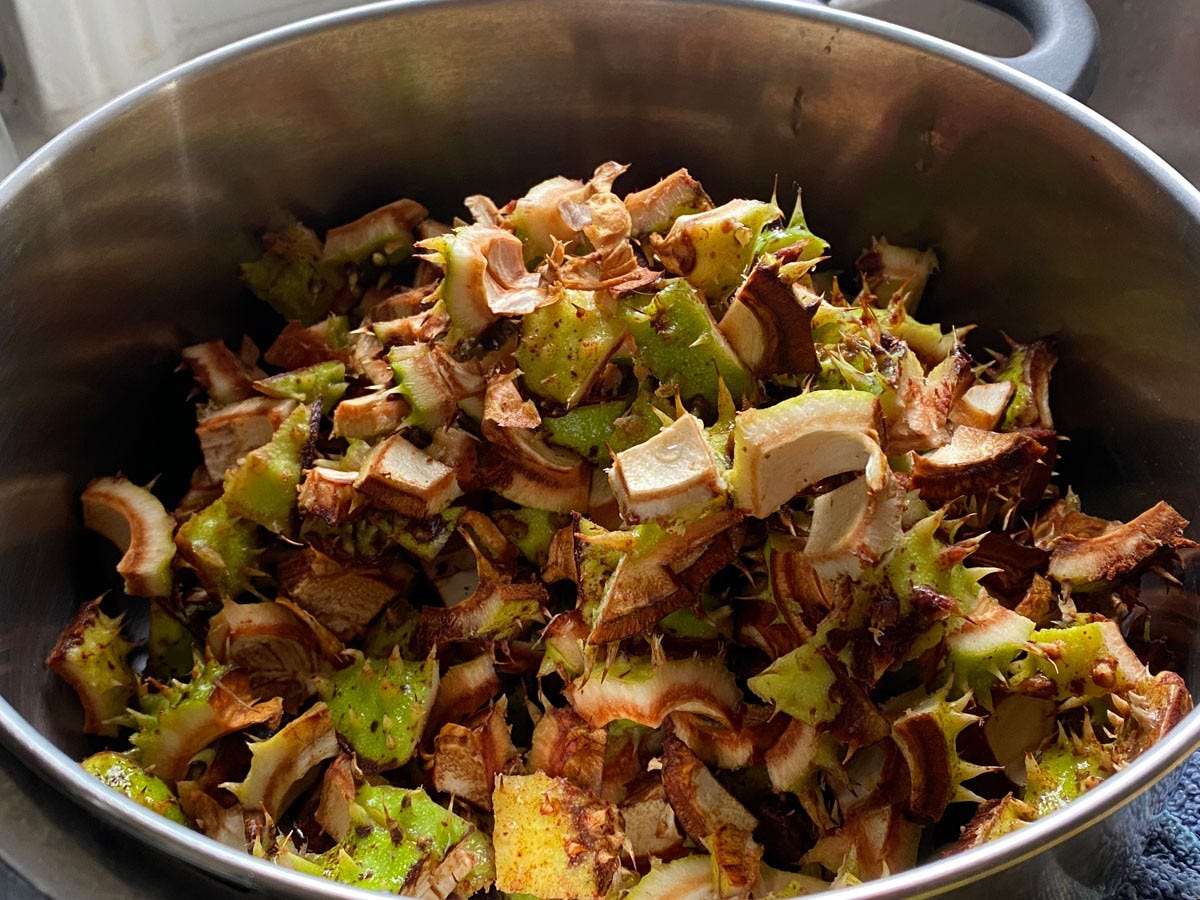
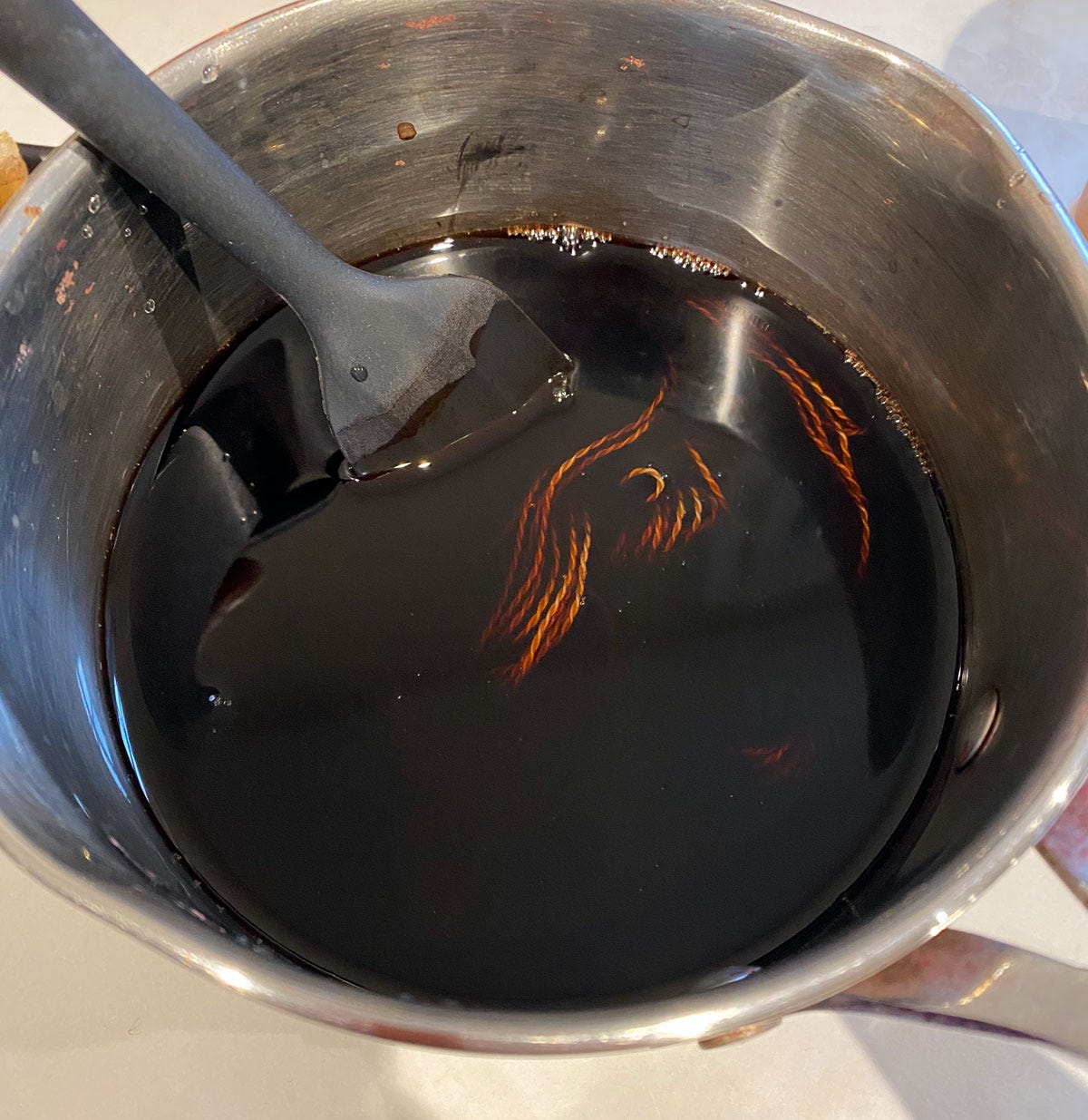
In the leftover dye I soaked, as an afterthought, a small skein of embroidery silk alongside one of linen, curious to see if and how they would each take up the dye.
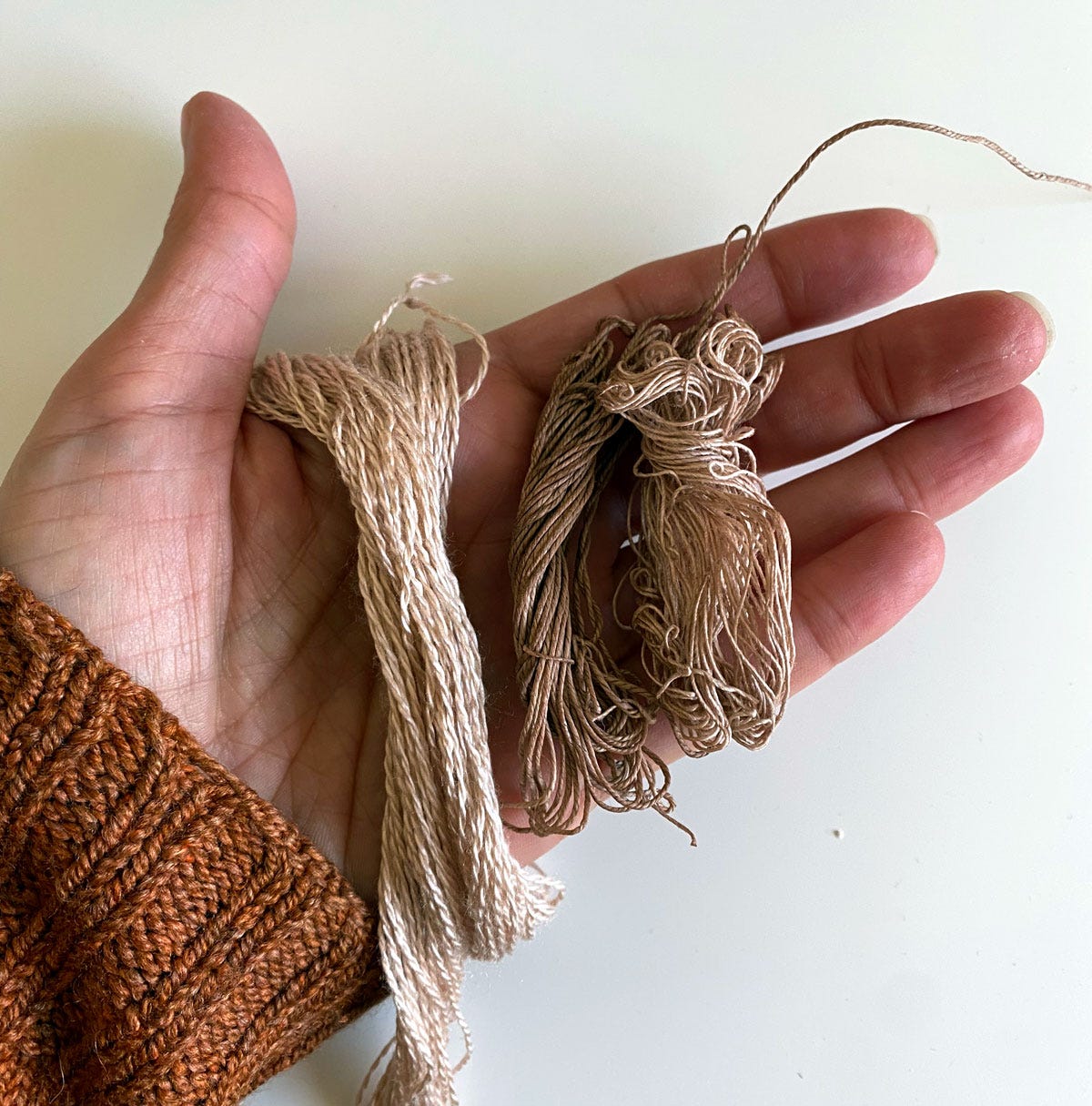
The result was subtle but pleasing, the linen dyed the deeper shade of the two. I couldn’t have guessed this result, and the surprise was like an invitation.
Next in line for this experiment was a batch of beautiful hawthorn berries. In my experience they could make a beautiful rust-coloured ink. Would they dye?
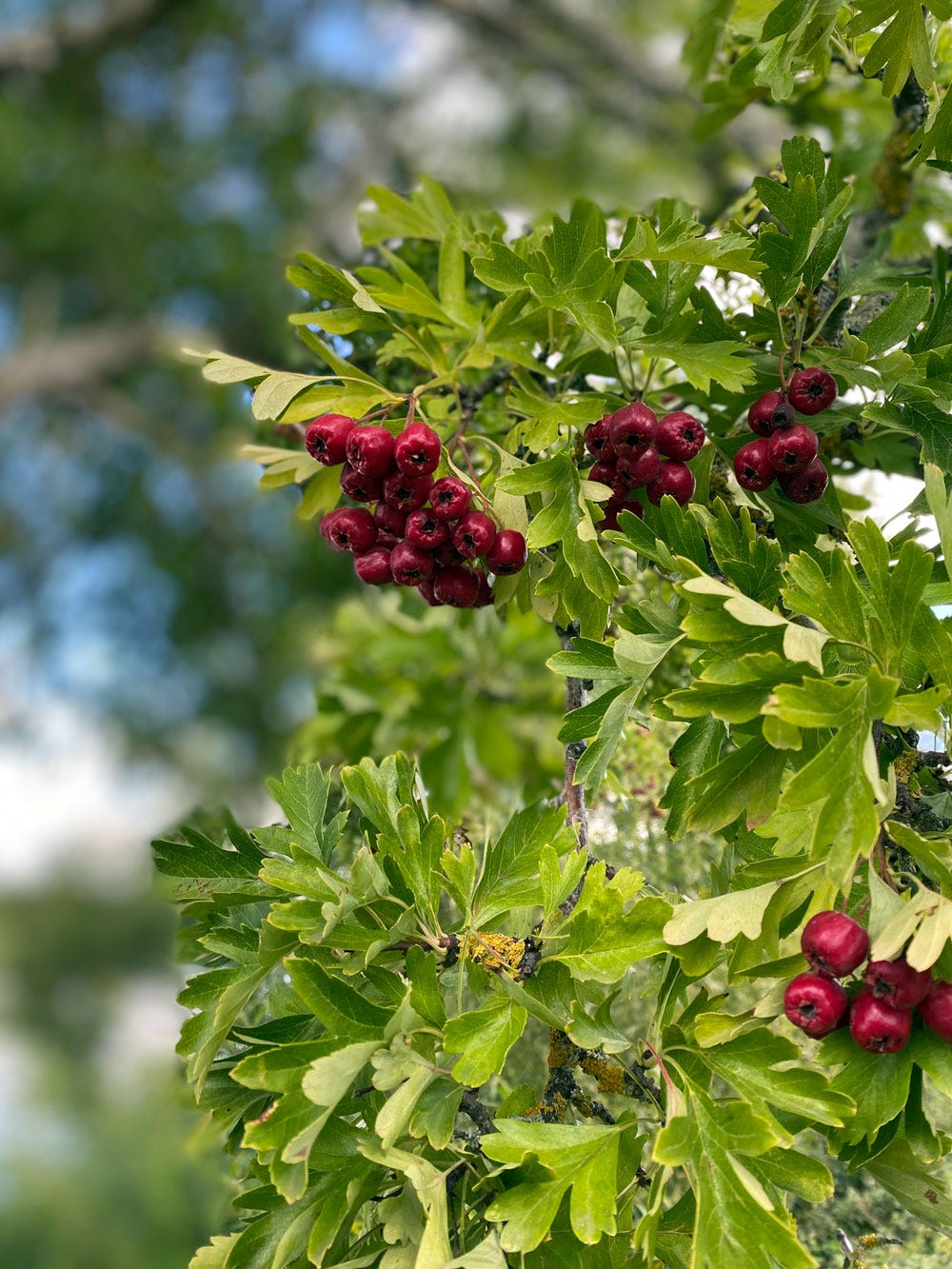
Again the two types of fibre captured slightly different hues, with the linen more reddish than the silk. How interesting they would look together…
A “shortcut” through the parks in October brought more discoveries (not such a shortcut after all).
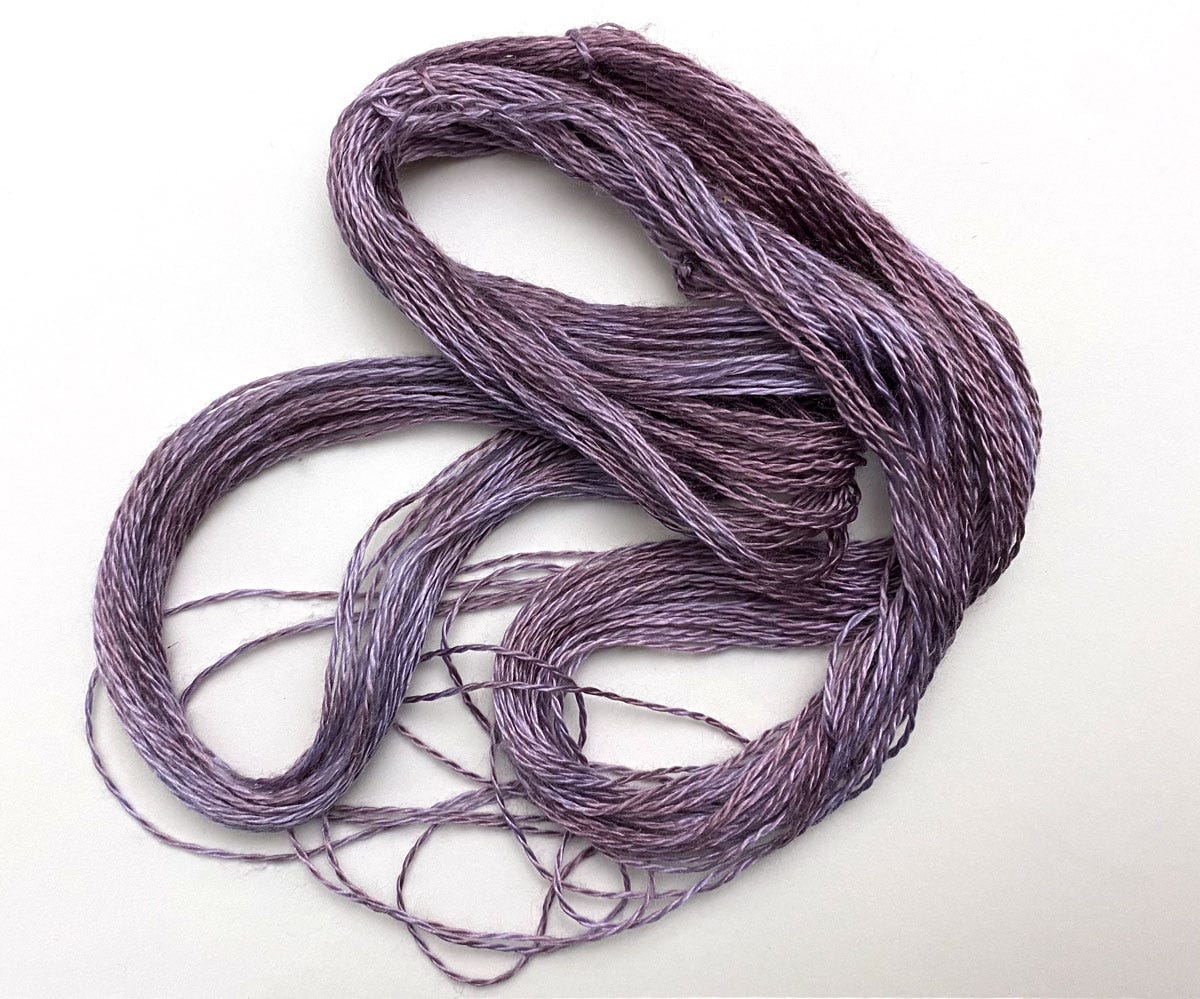
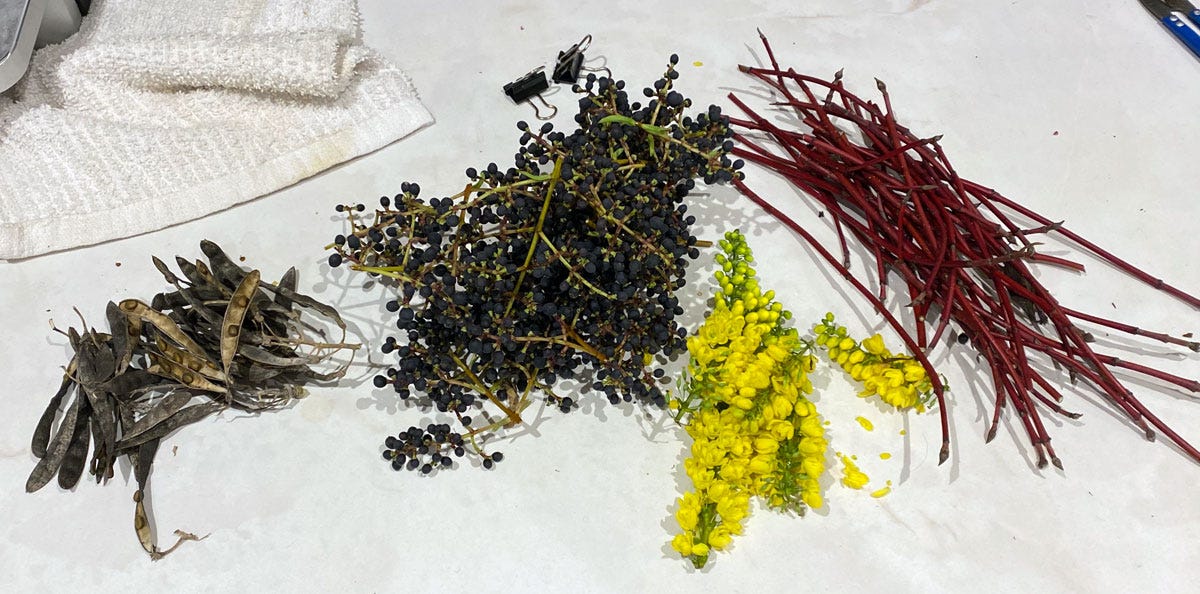
Walking past this bush, I felt compelled to stop at the sight of what appeared to be black rosehips, something completely new to me. That’s exactly what they were as this was a Scotch rose (Rosa spinosissima).


As soon as I put them in a pot with hot water and a pinch of alum, it became obvious they had much to offer. The skein when taken out after its long soak was a rich purple-red, though I was quite sure that it would dry to a much paler hue.


In fact it ended up this beautiful silvery purple I didn’t expect…
The park also presented me with a whole field of mullein, a flower I only rarely caught sight of hitherto. Mullein is curious in that it requires an alkaline to give up its colour, where most yellow flowers require an acidic medium.
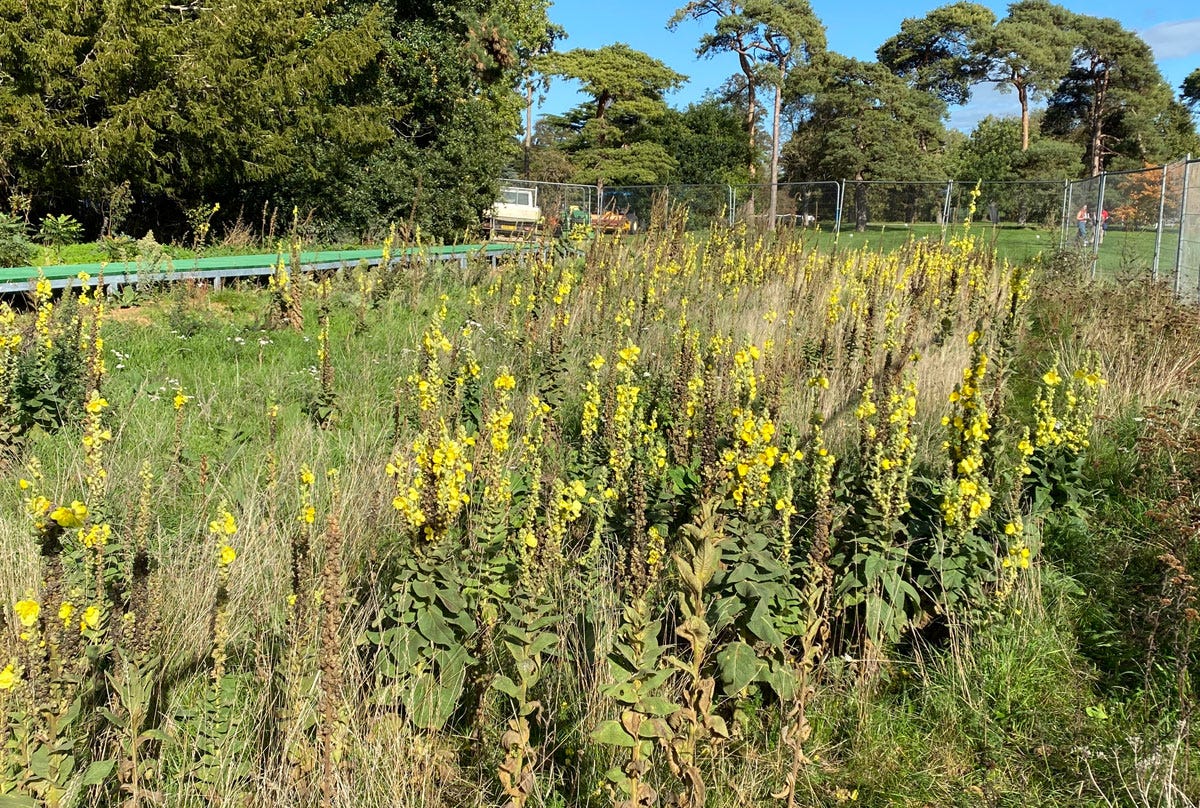
I didn’t expect any surprises this time but was very glad to add such a luminous hue to my palette. It dried to be a much more pastel yellow (pictured at the conclusion of this post).


At this point I cheated ever so slightly. This summer I found I had access to a wonderful four hundred-year old mulberry, and as I miss the berries from home I visited it often and gorged myself with them, but I also froze a certain amount with the thought I could make sorbet once I was fully moved in.


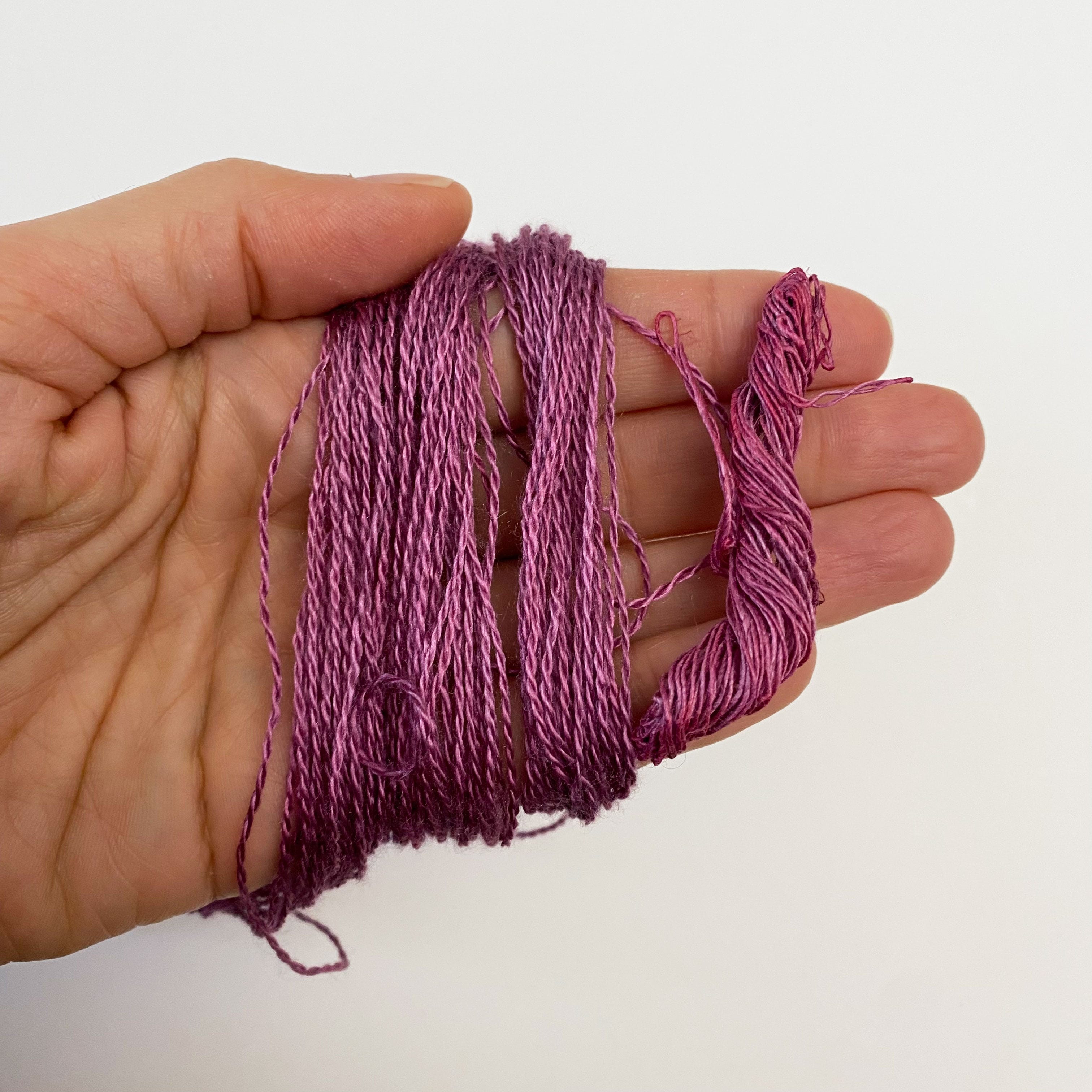
Mulberry juice is famously staining, so surely it should stain a little silk? Oh but it did, and was a feast for the eyes the whole time.


The final result (after drying) was this ridiculously good pink slightly tinged with blue. I thought I had peaked there, but no.
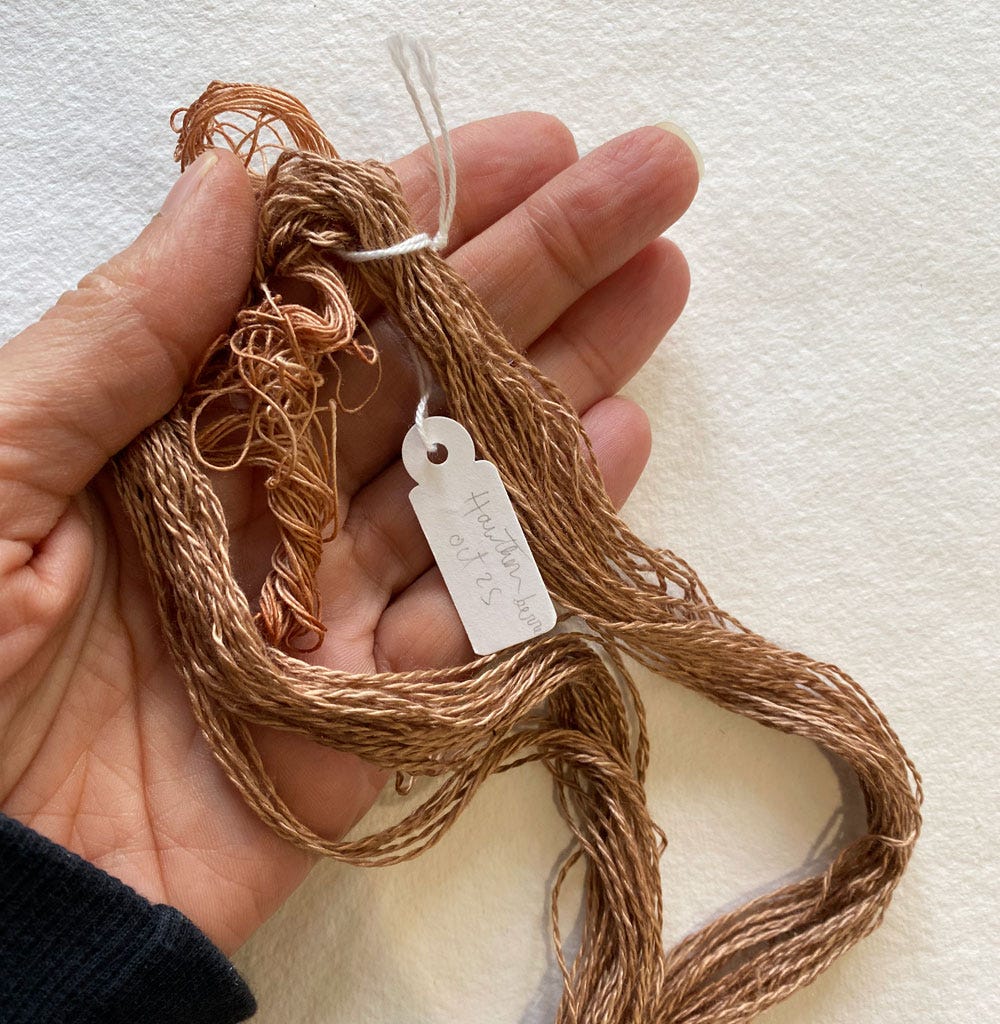
In late October, I walked past a neighbour’s front garden just as they were pruning their almond tree. On a hunch but without expectation, I asked if I could take the prunings.
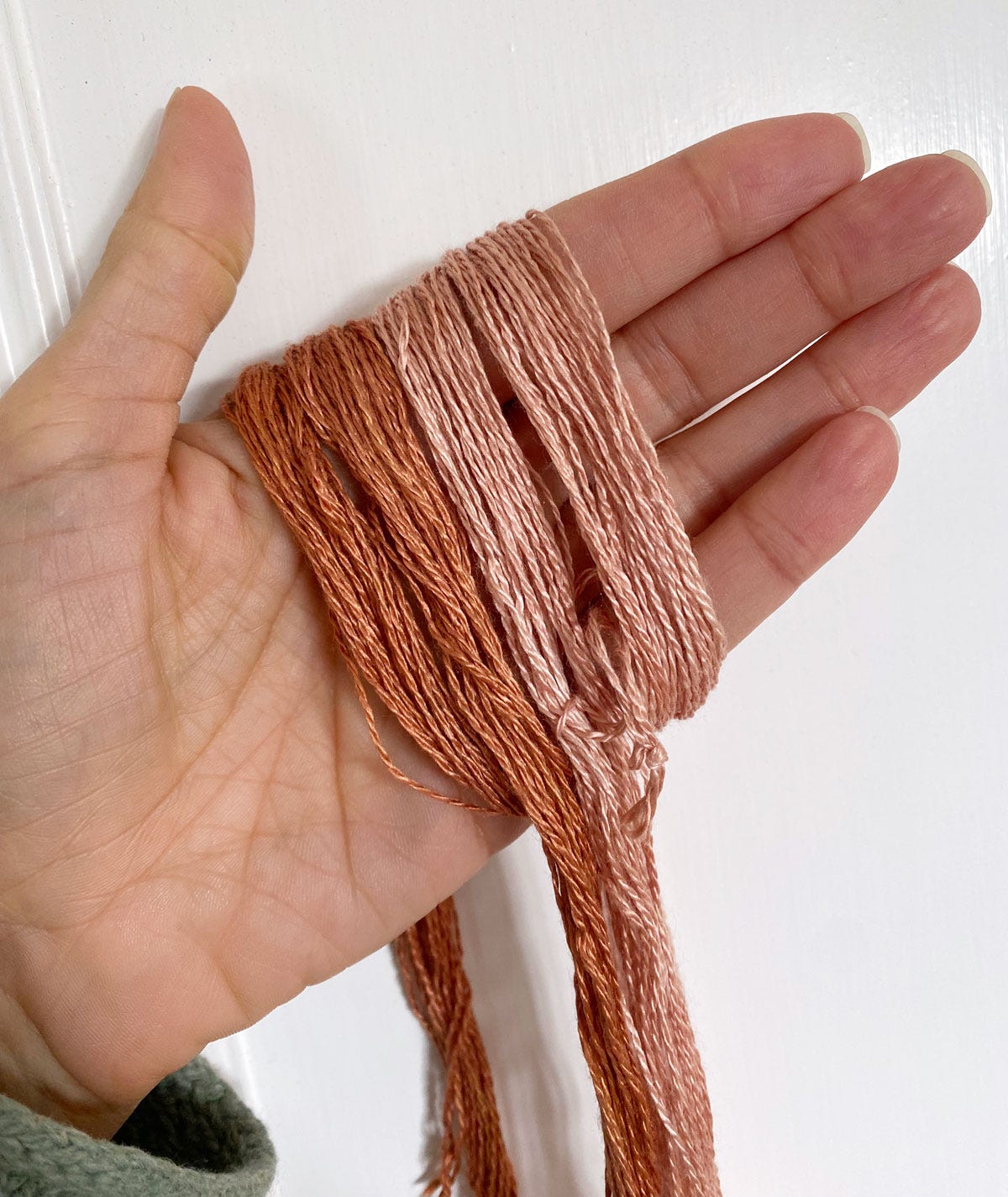
I snipped the slender branches into small segments and simmered them with a little soda ash, only to find the water turned a strong red that really took me by surprise. But the question was what this would mean on my fibres.


To my completed disbelief, after a couple of days of soaking my silk came out a deep copper. It had already been so promising in the early stages, above, that I had to try a second one for a briefer dip, and the result was this delicate salmon pink.
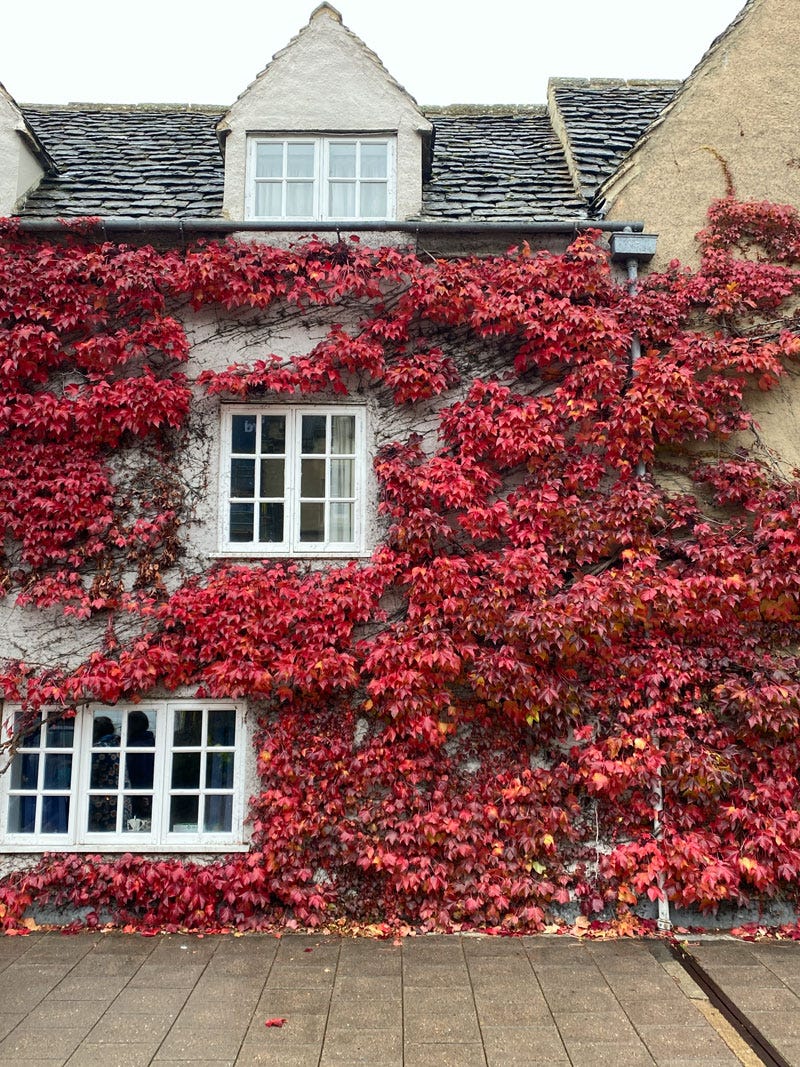
At the time of writing, I’ve had one more surprise that came from this wall belonging to Trinity College. Every year I admire it for its creeping vine’s spectacular autumnal display.
This time, once the leaves had fallen, I noticed the clusters of berries that had been growing in the background. This turned out to be a type of Virginia creepers (genus Parthenocissus), though I’m not sure of the exact species.
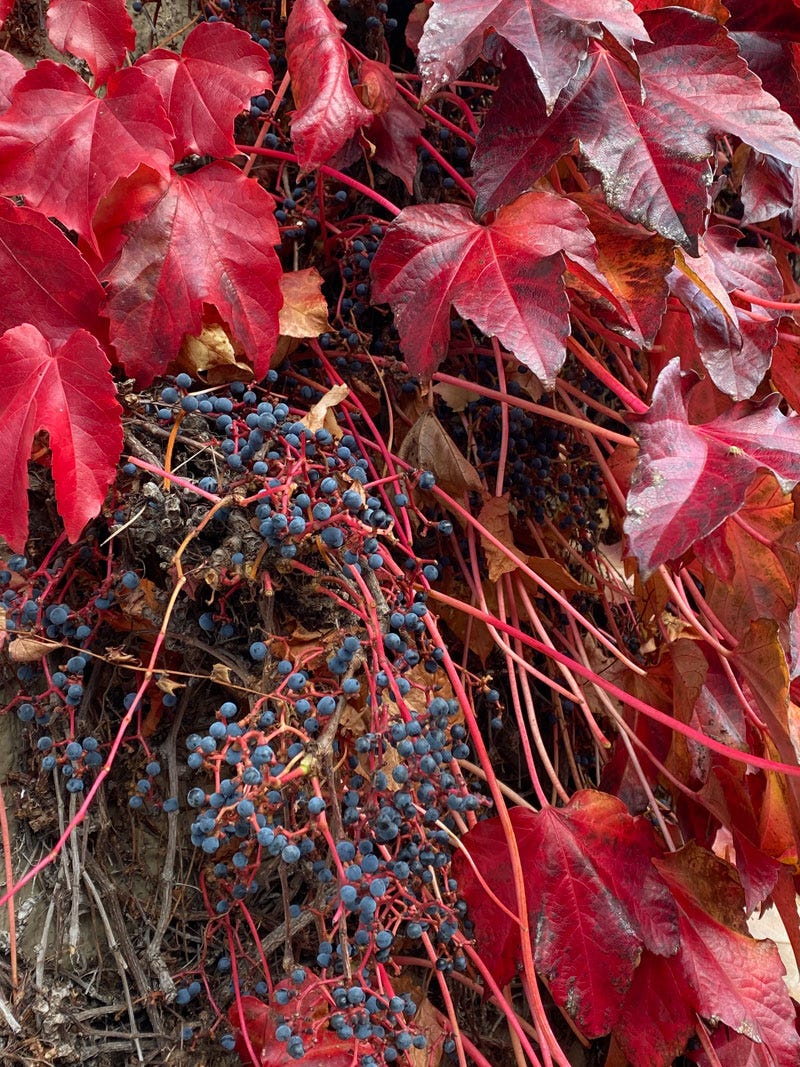
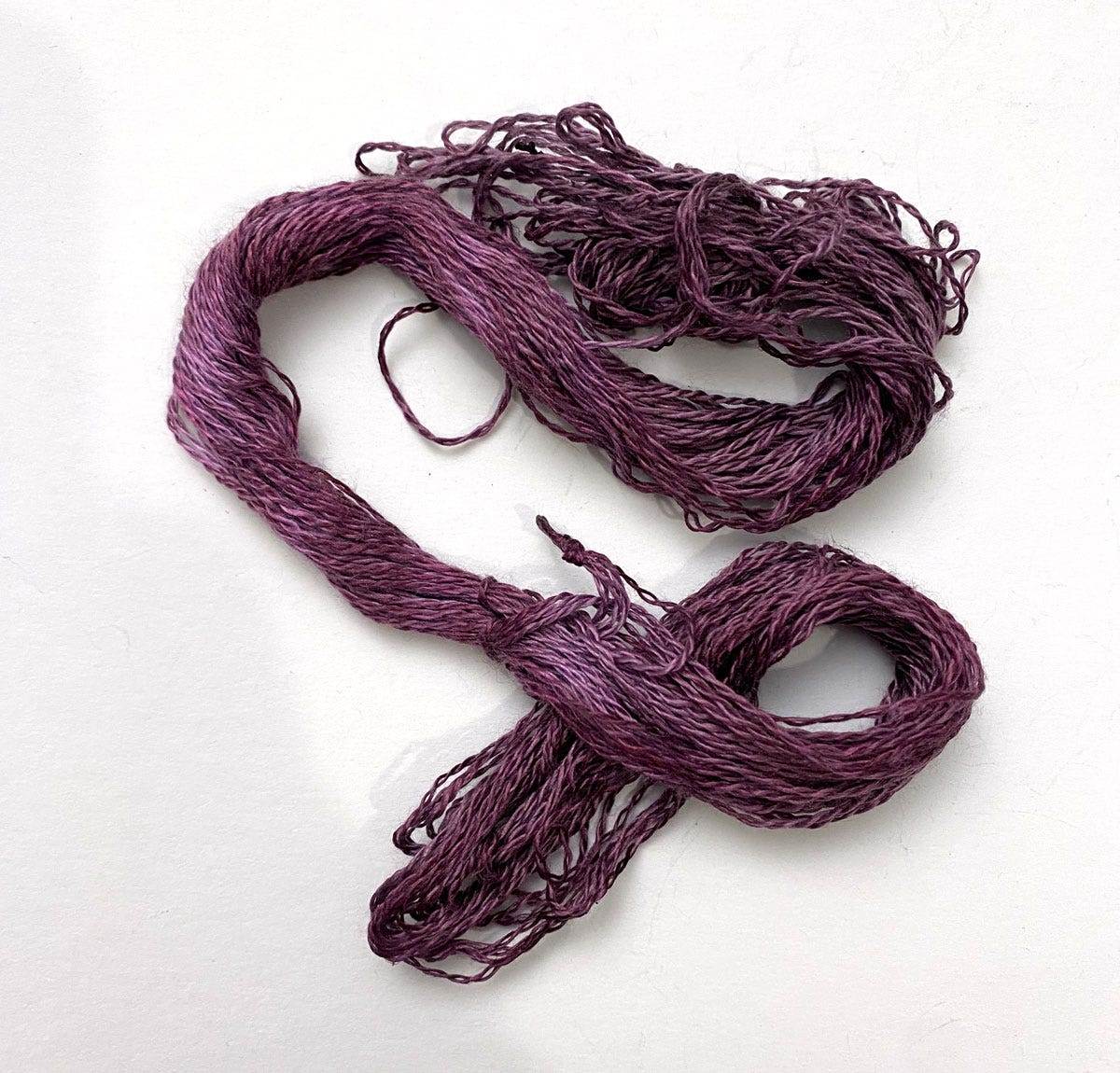
I gathered enough to fill a small jar, and into the pot they went, followed by a skein of silk. Perhaps I’m at risk of becoming jaded but I didn’t take a photo of the silk just as it came out of the dye. No matter, because it dried to the deepest purple of the whole run, a properly beguiling result.
Only the first season of this exercise in receiving colours has elapsed, and I wonder what will turn up during winter, let alone once spring returns! In any case I’m delighted with my palette to date, which I’m already stitching on paper.
Meanwhile I took a friend on another foraging walk yesterday, so the exploration continues. Like an Advent calendar of colours, except spread over all seasons.
I sense this method of acceptance could all do us some good this year. The impatience for change, for better times, for a brighter future has wrapped itself up into our cultural expectations. Bringing us back to the ‘fiber’ of our being, you have offered the greatest gift of all in this post! The ability to return to our essence of our selves as we investigate the core foundations around us.
Thank you.
That's really wonderful.