

False Red, Fake Blue
More scrutiny of medieval handbooks

I’m finally done with packing and shipping all my books, which was so stressful I may never do a kickstarter again, and returning to the spaciousness and freedom to research I enjoyed before I embarked on my single-minded project (important as it was).
Today I’m sharing a few discoveries I made while reading and comparing different manuscripts of the same ill-studied text (then I’ll attempt to respond to comments on my last two posts, which I’m sorry have gone unanswered!)
Not only is the vast majority of human knowledge not to be found online, but much of it is sitting forgotten in books that haven’t yet been read properly.
First let me introduce you to the Chortlemuffin effect, a term coined by the art historian, Prof. Sonja Drimmer:
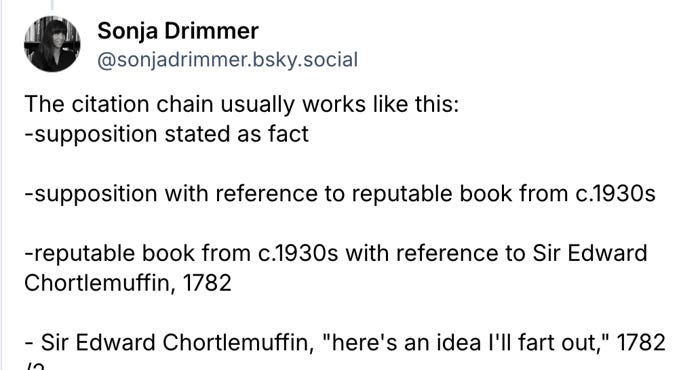
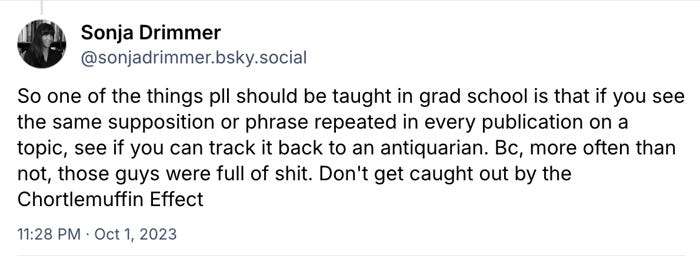
This canonisation of claims plucked out of thin air (infinitely worse when the source is “the internet”, where randoms will actively make stuff up for profitabe clicks) is why I work mostly from primary sources or praxis and check every citation.1 The field of Islamic codicology (the study of the materiality of manuscripts) is riddled with “accepted facts” that are in no way facts, all traceable to one Chortlemuffin of the 1960’s. “Myrtle gives ink a green tint” – not on this planet it doesn’t. “Sugar adds gloss” – like hell it does, that’s the job of gum arabic. Sugar just stops it cracking. “The addition of tannin deters mould” – does it really?!
All you need to do to check these handed-down statements is spend a few minutes in the kitchen, but academia is only now starting to get over its horror of descending into the real world.
False Red
One of the handed-down claims I had to tackle was the way successive readers of Umdat al-Kuttab took for granted that inks made from poppy anemone petals (Anemone coronaria) would be red inks. Now if you’ve made ink from red flowers, you know that capturing their colour is rarely posible, and in this case the recipe themselves never make that claim – they just specify using the petals when they’re intensely red. And while the operation does start with a disgorging of red, as below, that is not where it’s heading…
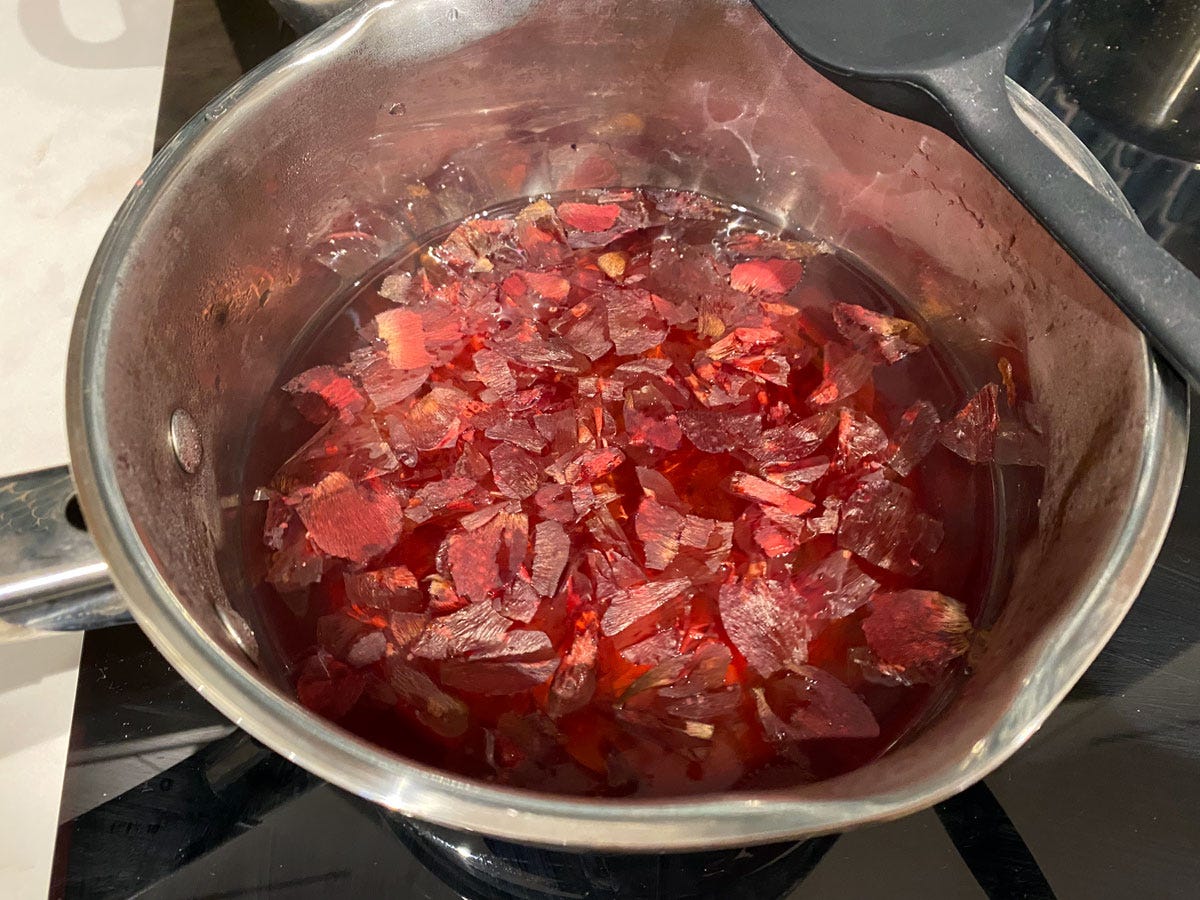
I have a good stash of dried anemone petals picked in Lebanon, so I was able to try two different preparations. The one for which I’m boiling petals, above, goes as follows:
Take intensely red anemone petals and remove the black parts; boil in water until its colour comes out as wanted, then take off the heat, strain and add to it a quarter of its weight in myrtle decoction, and 2 dirhams gum arabic; write with it.
I’ll share the result a little further down, but let’s stop here for a moment: did you say “remove the black parts”?
Here’s an anemone. Anemone petals don’t have black parts.
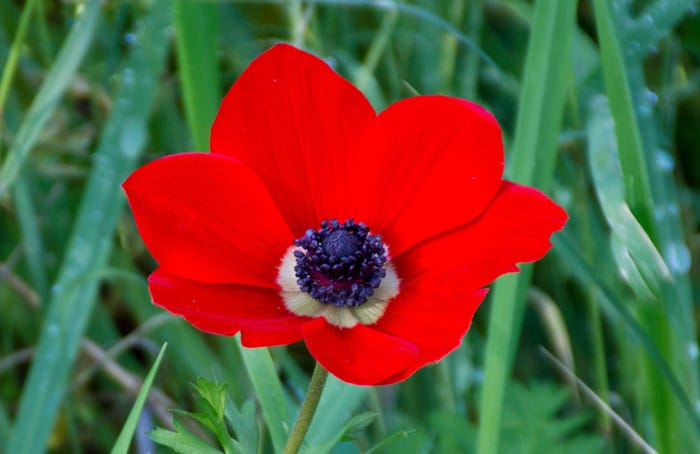
This little detail in the recipe suggests a confusion with the common poppy (Papaver rhoeas) which does have black spots on the petals, often much larger than the below:
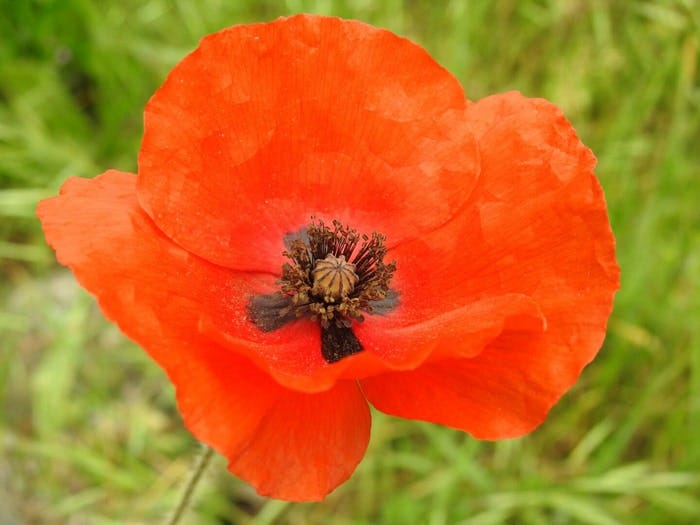
I had already tested poppies extensively when writing Wild Inks & Paints, and noted that if the black spots are not removed, they truly take over the ink, as they contain different chromophores to the rest of the petal. But poppies won’t give you red either, especially not if you prepare the recipe above. Here’s another, which in some copies of the manuscript is described as a “golden ink”:
Take anemone petals when they’ve turned red and pound them well in wine vinegar; place this on the fire and add a little gum arabic, then write with it.
Pounding even dry anemone petals with a little vinegar produces this intense red…
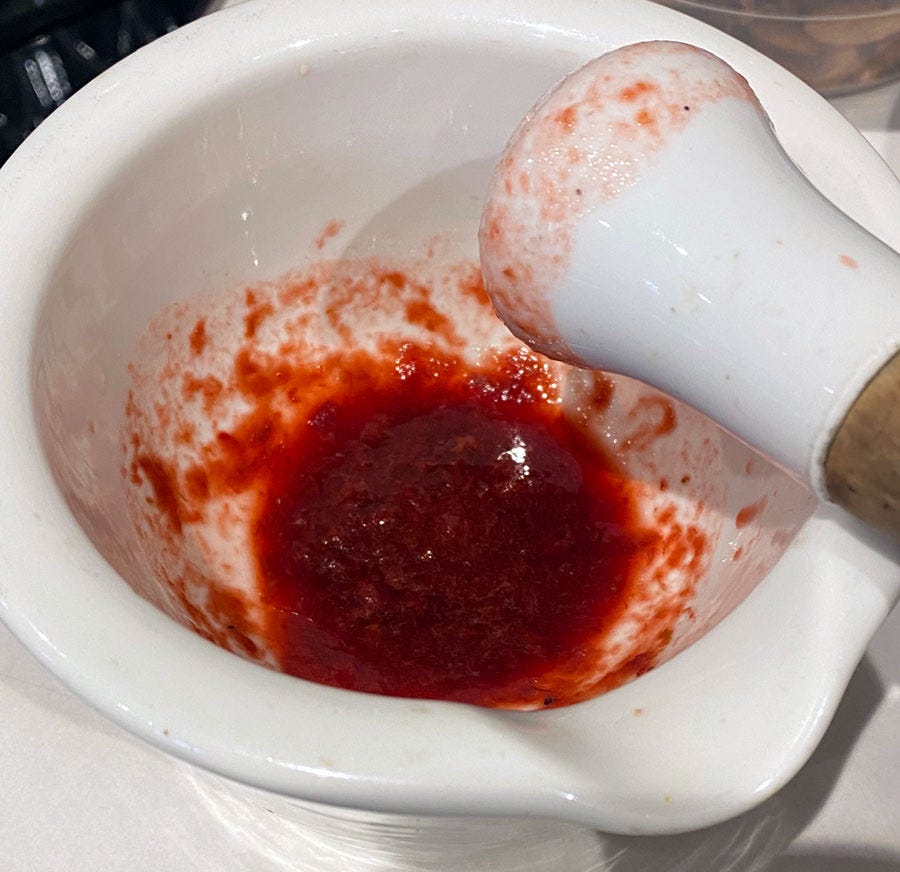
... but there isn't any way to hold on to this hue when it dries. I tried every trick in the book, but that biochrome just isn't viable. It browns as it dries.
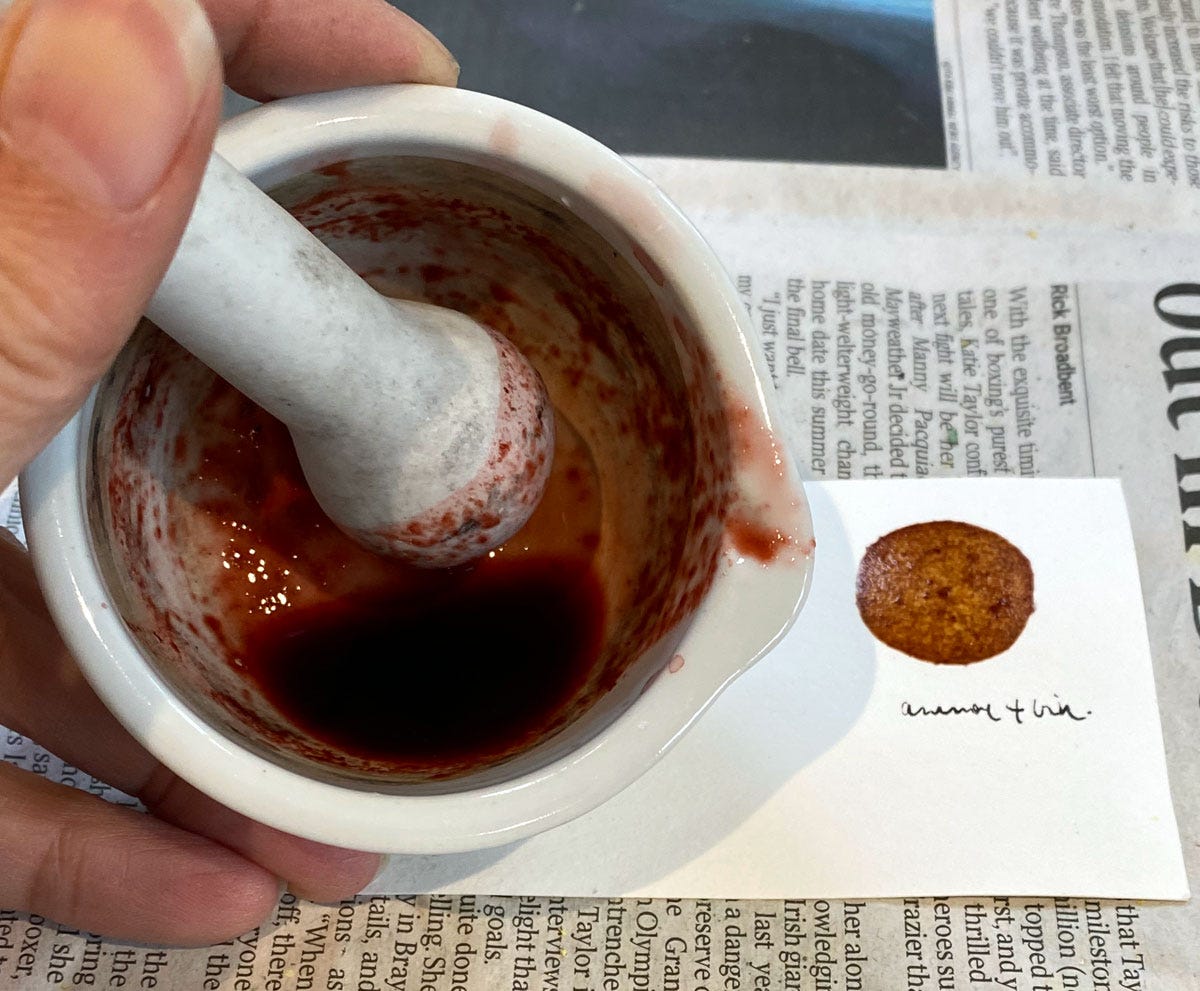
In the language of the time, with no word for “brown”, this would still be called “red”, but it would never be mistaken for, or ranked alongside, the highly desirable mineral reds of cinnabar and minium, nor even the proper organic reds of lac and safflower. Which is why I think these are writing inks, not colouring inks.
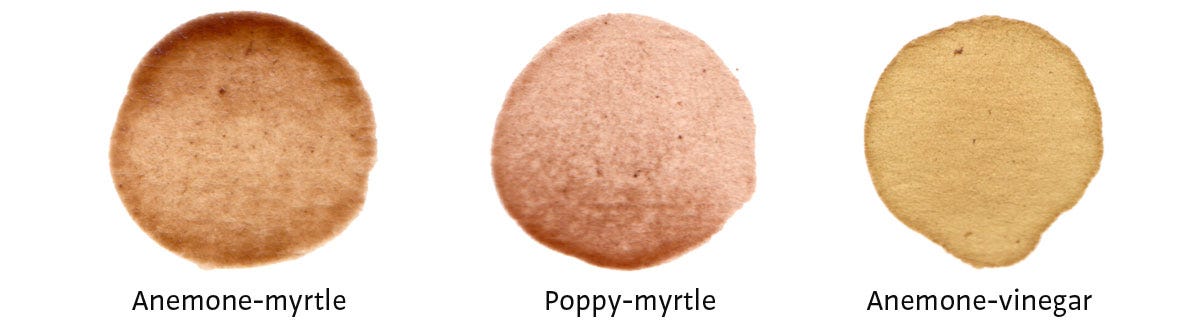
If you follow the two recipes above to the letter, here are the results you get, more or less. There was a basis for titling the last one “golden ink” in later editions!
Fake Blue
The colour history books are overdue a correction: they all point to Cennino Cennini’s 15th century treatise for the earliest description of the process of extracting lazurite from lapis lazuli. Yet I have two different Arabic texts that describe this process, with variants, a full 200 years earlier. Both digitised and downloadable for free from Western libraries, and both clearly left unread, at least by anyone who cares to correct the official history.
Our Chortlemuffin certainly didn’t; he didn’t merely hand out misinformation, but by ignoring and dismissing manuscripts other than the (useless) one he fixed his attention on, he ensured a lot of information remained buried because nobody felt they needed to go looking for it.
In this case, the buried information is to do with the two cups below. One of them is filled with lapis lazuli. The other I made in my kitchen.
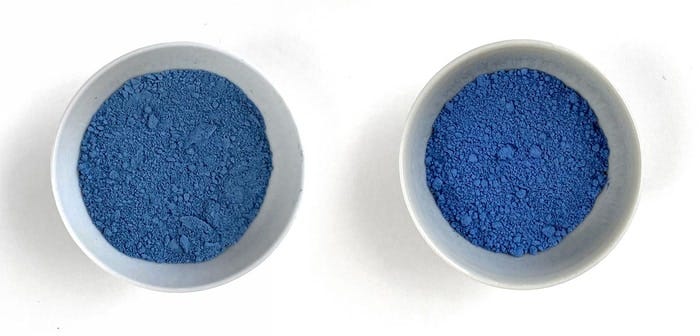
In two versions of the Umda (the ones ignored by every single study of the text) there’s a recipe for counterfeit lapis lazuli credited to Omar the Forger. And it’s brilliant.
This dates from before the method to extract pure lazurite was devised, so lapis pigment was not the intense blue we expect today; calcite and other inclusions rendered it ashy or greenish. The fake lapis above doesn’t compare to ultramarine, which is pure lazurite, but is pretty convincing next to the lesser grade that was common at the time:
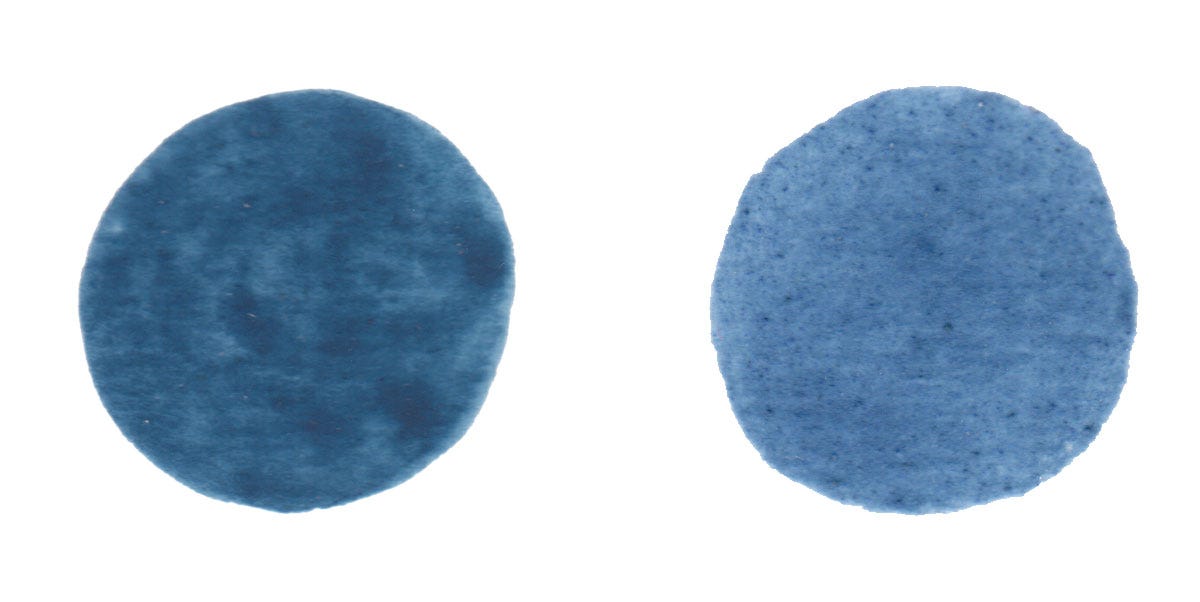
In both photos, the fake is on the left...
How to make the lapis lazuli produced by Omar the Forger, that is better than the mineral kind: Take soft marble, intensely white, and roast on a manure fire for a day and a night, then cool and pulverise on a slab until it’s fine as dust. Take “dyer’s froth” and water the roasted marble with it, mulling it with a mulling stone, and whenever the “froth” is absorbed add some more, until the colour is beautiful and lapis lazuli-like. Leave it then to dry, then store it. It comes out like mineral lapis lazuli; this has been tested and is true.
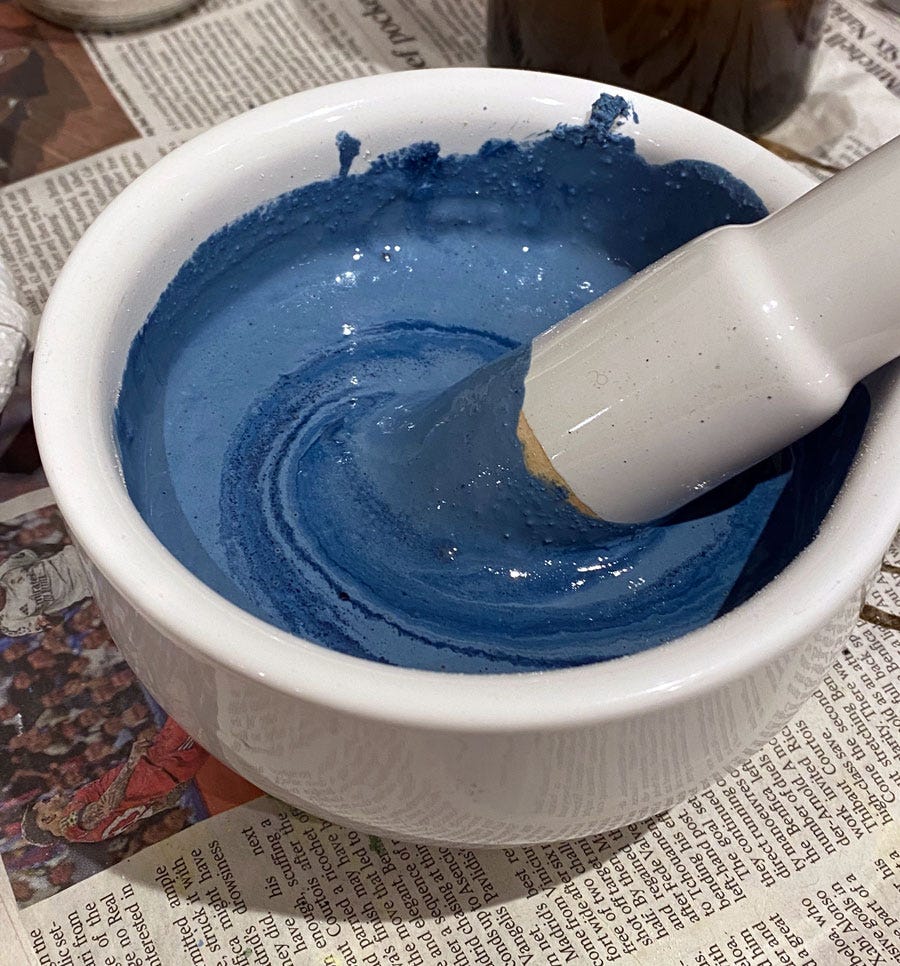
What is dyer’s froth, then?? It doesn’t exist. That is not the name of anything, it’s a code word so the recipe would only make sense to the initiated. If you work with dyes, you know right away this can only refer to indigo dye.
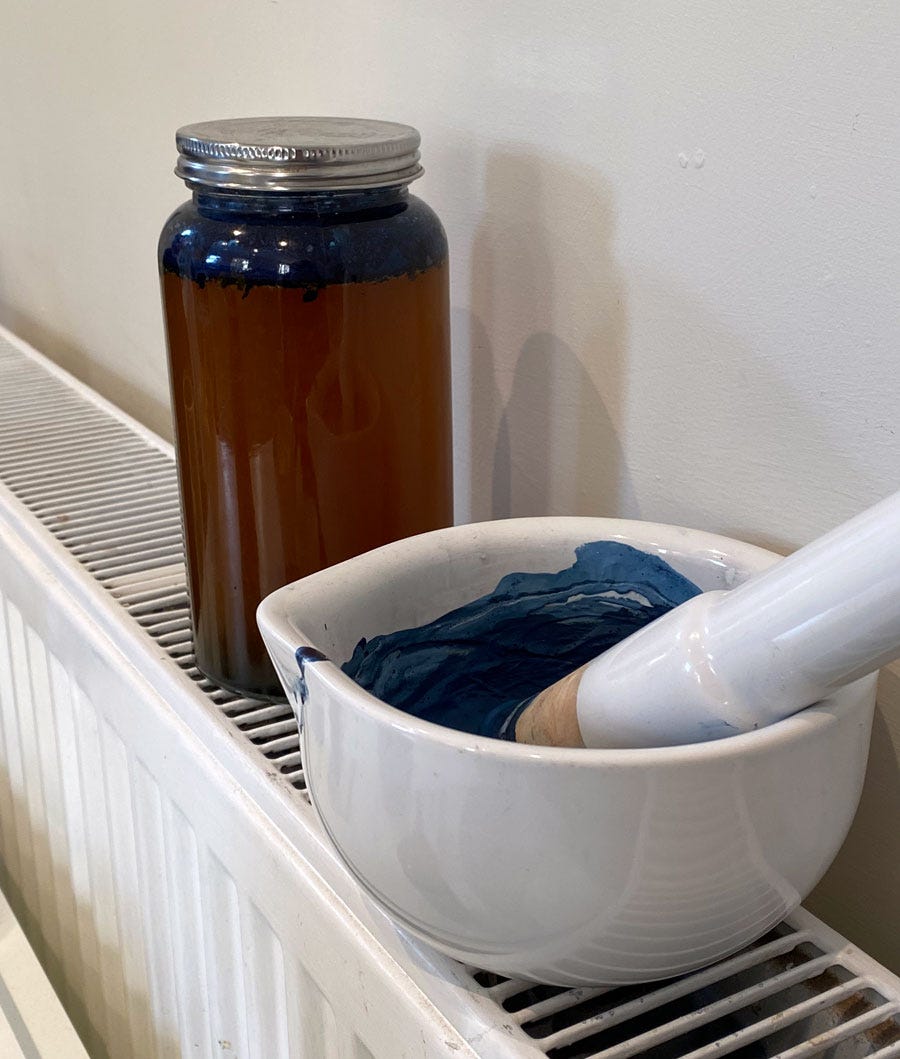
Indigo is نيل nīl throughout the text, where it's used in its solid form, ground like a pigment and used as such. In this form it's almost black, barely identifiable as a blue. It's only the dye, which is the translucent yellow liquid above, that produces the striking indigo blues on whatever is dyed with it. But you can't paint with the dye or use it as an ink. Instead, Omar the Forger dyed pure white calcite with it (basically chalk), capturing the blue in a mineral substrate, which can be powdered and used as a pigment. So simple and effective.
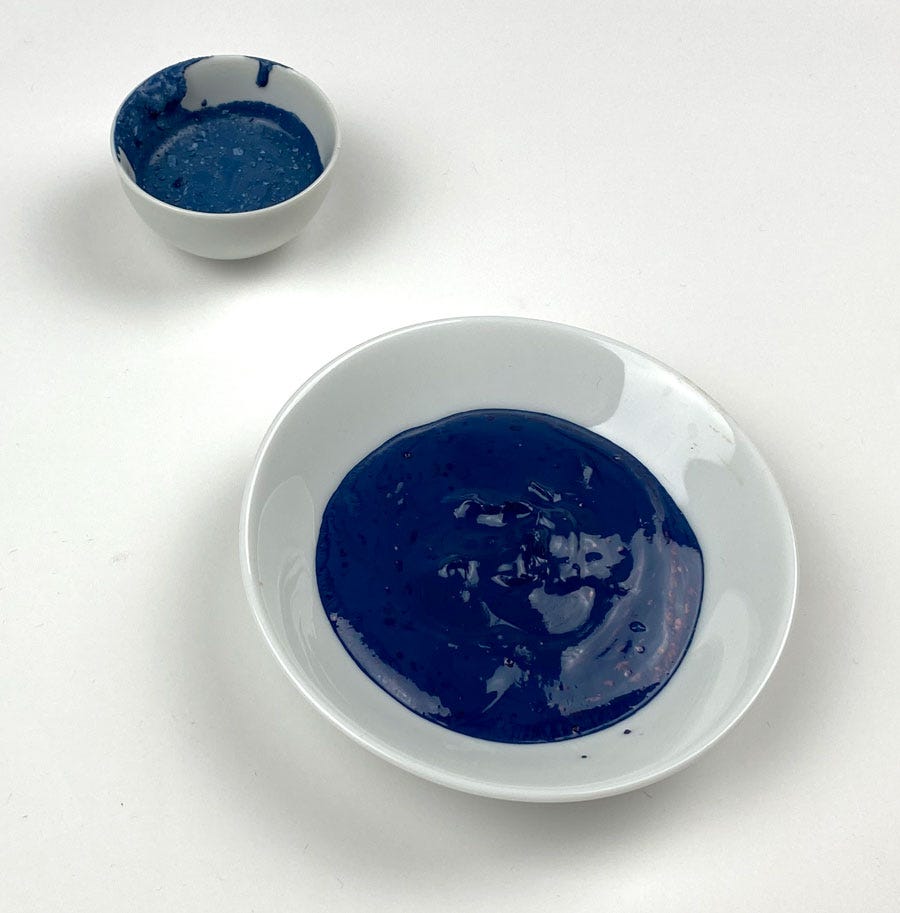
You can control the depth of the blue the same way you can control it when dyeing fabric, to make lighter or darker blue. And I've been losing my mind over this, because blue pigment is rare, and rarely sustainable. Lapis lazuli was never terribly ethical but right now it directly finances the Taliban, so for myself, I’m never sourcing Afghan lapis again. There are other solutions: genuine lapis from Chile, or from Siberia (another questionable source), and there's also synthetic ultramarine, and also azurite for a different hue... But to be able to make a good blue pigment from a sustainable plant dye + chalk was an epiphany, and to think this was known, then forgotten! What else do medieval forgers have in store for us?
I had applied for a grant to finish translating the much-misrepresented Umda. I sadly didn’t get it, but that’s not going to stop me – it’ll just take longer than it could have otherwise. But what’s a year or two when it’s already waited 10 centuries.
One such investigation served to root out the oft-repeated notion that cornflowers were ever used as blue dye or watercolour (see also Sean Silver’s comment beneath the article):

This is brilliant! You're right about the Chorttlemuffle effect. I've had the experience of tracking down a source an finding out that someone made it out of whole cloth sometime in the 60's due to... frequently, racism, or orientalism, or something of the sort. It's only now that people are waking up to the problem. To be fair to previous generations, consulting manuscripts is easier now than it was half a century ago.
Omar sure knew his business! Thanks, that was mighty interesting!